Tissot Seastar 1000 vs. Mido Ocean Star 200: Which to Buy?
Compare the 43mm Tissot Seastar 1000 and 42.5mm Mido Ocean Star 200 on fit, movement, bezel, and value, with a guide to the newer Mido reference.
The Tissot Seastar 1000 is our pick for buyers who prioritize dive-watch specifications; the Mido Ocean Star 200 makes more sense when a thinner case and day-date display matter more. Both have long-running automatic movements, so the decision comes down to what you notice while wearing the watch: the bezel, the profile, and the dial.
This comparison covers the blue bracelet versions: the 43mm Tissot T120.407.11.041.03 and 42.5mm Mido M026.430.11.041.00. Those references matter. A smaller Seastar or a ceramic-bezel Ocean Star changes the buying decision.
Product links may earn us a commission at no extra cost to you. This is a specification-based editorial comparison; this update does not include a new side-by-side wear or accuracy test.
Tissot Seastar 1000 vs Mido Ocean Star 200 Comparison
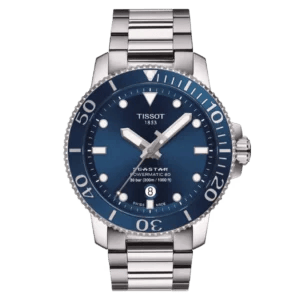
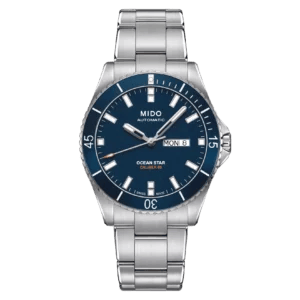
| Feature | Tissot Seastar 1000 | Mido Ocean Star 200 |
|---|---|---|
| Case diameter | 43 mm | 42.5 mm |
| Case thickness | 12.7 mm | 11.8 mm |
| Movement | Powermatic 80 automatic | Caliber 80 automatic |
| Power reserve | Up to 80 hours | Up to 80 hours |
| Calendar | Date | Day and date |
| Water resistance | 300 m | 200 m |
| Bezel insert | Ceramic | Aluminum |
| Crystal | Sapphire | Sapphire |
| Caseback | Display | Solid |
| Main reason to choose it | Ceramic bezel and higher depth rating | Lower profile and day-date utility |
The Quick Verdict: Which Should You Choose?
Choose the Tissot when you want a visibly sporty watch and put a ceramic bezel high on your checklist. At similar purchase prices, its material specification is the more persuasive starting point. The display caseback is a pleasant extra if seeing the mechanism is part of the appeal of an automatic.
Choose the Mido when you prefer a quieter dial and want your diver to work with office clothes as well as a T-shirt. Its thinner case is a tangible difference, and the weekday display is something you can use without going near the water.
For a small wrist, try both before deciding. The Mido’s diameter is only half a millimeter smaller. That does not make it a compact watch or guarantee a better fit.
Dial Aesthetics: Two Different Kinds of Blue Diver
The Seastar’s gradient dial and round hour markers give it a more overtly sporty appearance. The broad hands and polished-looking bezel reinforce that character. It is the design we would choose when the watch is meant to stand out.
The Ocean Star is more orderly. Its rectangular markers, relatively even blue dial, and partly open hands give it a quieter character. The day-date opening adds information, but it also takes up more dial space. Whether that is useful or distracting depends on how often you check the weekday.
This is worth considering after the specifications are settled. A ceramic insert may look better on a feature list, but it cannot compensate for a dial you enjoy less. For a one-watch collection, choose the design you are happy to see with most of your wardrobe.
Bezel Material: Ceramic vs. Aluminum
The Seastar’s ceramic insert is the stronger choice for resisting everyday surface scratches. The older Ocean Star’s aluminum insert is more likely to pick up visible wear. That gives Tissot a useful advantage if you want a watch that keeps a crisp appearance.
Scratch resistance is not the same as being damage-proof. We would not buy either watch expecting its bezel to remain unmarked through every impact, and aluminum does not inevitably develop attractive fading. Condition matters more than the promise of future patina when buying an older example.
At a similar price, ceramic is a point in the Tissot’s favor. If the Mido’s design appeals more, accepting an aluminum insert is a reasonable tradeoff. Buyers who want both Mido styling and ceramic should consider the Ocean Star 200C below.
Case Ergonomics: The 0.9mm Difference
The thickness difference deserves more attention than the diameter difference. A lower case profile generally has a better chance of clearing a close-fitting cuff and can make a large watch less obtrusive. That is the strongest reason to favor the Mido for office use.
It is an inference from dimensions, not a guarantee of comfort. Wrist shape, lug angle, bracelet end links, and clasp position all affect how a watch sits. Two people with the same wrist circumference can prefer different cases.
On either watch, check whether the case and bracelet remain centered when you turn your wrist. A properly sized bracelet will tell you much more than trying on a loose display watch. If both feel too wide, our guide to small dive watches offers alternatives.
Movement: Similar Endurance, Different Calendars
The advertised power reserves are a tie. Fully wound, either should have enough reserve for a typical Friday-evening-to-Monday-morning break. That is useful if you rotate watches, although a watch worn briefly may not start the weekend fully wound.
The calendar is a clearer everyday distinction. Mido gives you the weekday alongside the date; Tissot keeps the display simpler. If you often look at your watch when filling in a form or checking your schedule, Mido’s extra indication has a practical purpose.
Tissot currently specifies a Nivachron balance spring for this reference. Do not assume that the newer 41mm Mido’s Nivachron specification establishes what is fitted to every earlier Ocean Star. Check documentation for the actual example when that detail matters to you.
We would not infer an accuracy winner from the movement names, jewel counts, or reserve. Choose between these watches primarily for their case and calendar, rather than an assumed difference in timekeeping.
The Bracelet: What to Check Before Buying
Tissot lists a quick-release bracelet and a folding safety clasp with a diver extension. Quick release is useful if you alternate between steel and a strap, though the replacement still needs to fit the watch.
For the older Mido, ask the seller for a photograph or demonstration of the supplied clasp. A diver extension and fine daily adjustment are different functions. Do not assume a clasp feature described for another Ocean Star reference is present here.
On either watch, check whether you can achieve a comfortable fit with the available links and adjustment positions. On a used example, also check that spare links are included. A bracelet that fits well will matter every day.
Water Resistance: Does 300m Beat 200m?
Tissot has the higher stated rating. For ordinary swimming and daily use, the difference is unlikely to decide which watch you enjoy more.
The condition of the individual watch matters, especially with older stock or a used example. Follow the manufacturer’s care guidance and have water resistance checked before relying on an older watch in the water. The printed rating does not tell you the condition of its seals today.
For most readers, we would give greater weight to the fit and bezel than to the extra 100 meters on the specification sheet.
Price and Value
As checked on September 24, 2026, Tissot’s US listing prices the Seastar at $925. We have not assigned a new official US price to the older Mido because its former product URL opens another reference. The $980 price on that destination belongs to the newer 41mm watch.
Compare actual offers for the exact references, taking account of condition, included bracelet links, warranty provider, and returns. An apparently lower price can be less attractive if it leaves you with an uncertain service history or a poor fit.
At similar prices, we favor the Tissot’s bezel and specification package. A well-priced Mido is persuasive when you specifically want its thinner case and day-date layout. Paying more for it can still make sense for personal preference, but the premium needs a reason beyond an assumed movement upgrade.
The Newer Ocean Star 200 and Other Variants
The current blue Ocean Star 200, M026.930.11.041.00, has a 41mm case measuring 11.7mm thick. Mido lists an 80-hour reserve, Nivachron spring, day-date display, and 200m water resistance. Its US page showed $980 and an out-of-stock notice when checked for this update.
That smaller case makes it worth considering alongside the Tissot. Check the full reference number when moving between an article, retailer, and manufacturer page.
The Ocean Star 200C, M042.430.11.041.00, is another distinct option. It adds a ceramic bezel and keeps a 42.5mm diameter, with a 12.3mm case. Against that watch, the Tissot loses its exclusive ceramic advantage, while the Mido loses some of the older model’s thickness advantage.
Tissot also offers a 40mm Seastar 1000 automatic. Consider that size if the 43mm version is the only thing holding you back.
Final Thoughts
Our recommendation is the Tissot Seastar 1000 for the buyer who values the ceramic bezel, sportier appearance, and higher depth rating. The Mido Ocean Star 200 is the more appealing choice for someone who wants a lower profile and a weekday display.
The Mido does not need to win every specification to be the right watch. Its appeal is the combination of size, dial, and calendar. The Tissot earns its recommendation through features you can identify before buying, rather than an assumption that one brand is inherently better.
For another affordable Swiss option, read our Hamilton Khaki Navy Scuba vs. Tissot Seastar 1000 comparison. If you are considering spending more, our Longines HydroConquest vs. Mido Ocean Star 200 comparison explores that step up.
Frequently Asked Questions
Is Mido better than Tissot?
There is no useful brand-wide winner for this purchase. Compare the exact watches. In this pairing, the Seastar has a ceramic insert and a higher water-resistance rating, while the earlier Ocean Star is thinner and adds the weekday.
Which is better for smaller wrists?
The older Mido is thinner, but it is still 42.5mm wide. Try both on, and consider the 41mm Ocean Star 200 or 40mm Seastar if either feels too broad.
Is the Ocean Star 200 the same as the 200C?
No. The 42.5mm Ocean Star 200 compared here uses an aluminum insert. The blue 200C reference discussed above uses ceramic and has a thicker case. Check the reference as well as the collection name.
Has the Mido Ocean Star 200 been discontinued?
The collection remains available. The older reference’s official link now redirects to a different 41mm model; that redirect alone does not establish availability at every retailer or a formal discontinuation date for the older watch.