What Is a Pilot Watch? Everything You Need to Know
A pilot watch is an aviation-inspired watch designed around fast legibility, easy operation, and practical timing or navigation features. Traditional pilot watches usually have large high-contrast dials, bold Arabic numerals, strong lume, and crowns that are easy to grip.
Today, most pilot watches are worn on the ground rather than in the cockpit. Their appeal comes from the mix of military and aviation history, clean utility, and an easygoing tool-watch look that works well with casual everyday clothing.
History of Pilot Watches
Pilot watches trace their roots to the earliest years of aviation, when reading a pocket watch while operating an aircraft was awkward and unsafe. One of the most famous origin stories is the Cartier Santos, created in 1904 for Brazilian aviation pioneer Alberto Santos-Dumont so he could check the time without taking his hands off the controls.
As aviation advanced, watches became more specialized. Early pilots needed clear dials, reliable timekeeping, and cases that could handle vibration, magnetism, and difficult operating conditions. Later, military aviation helped shape the oversized, highly legible Flieger-style watches that still define much of the category today.
The category also expanded beyond simple time-only watches. Navigation watches such as the Longines Lindbergh Hour Angle helped with position calculations, while the Breitling Navitimer brought a slide rule bezel to the wrist for aviation math. Modern pilot watches can be minimalist, military-inspired, travel-focused, or highly technical.
What Makes A Watch A Pilot Watch?
There is no single universal standard that every pilot watch must meet. Unlike dive watches, pilot watches are more of a design and functional family. Still, the best examples share a few practical traits.
High-Contrast Dial
A pilot watch should be readable at a glance. That usually means a dark dial, bright hands, large hour markers, and clean minute tracking. Many pilot watches use large Arabic numerals because numbers are faster to interpret than decorative markers.
Large Hands And Strong Lume
Pilot watches are built around visibility. The hands should be long, distinct from each other, and easy to read in low light. Lume on the hands and markers is common, especially on watches inspired by military aviation.
Oversized Crown
Historically, large crowns made it easier for pilots to operate a watch while wearing gloves. Modern pilot watches do not need huge crowns for daily use, but the oversized onion or diamond crown remains one of the category’s most recognizable design cues.
Practical Case Size
Early pilot watches could be very large, sometimes over 50mm, because they prioritized cockpit legibility over daily comfort. Modern pilot watches are usually more wearable. For most wrists, something around 38mm to 42mm is easier to live with than a historically oversized case.
GMT, Chronograph, And Slide Rule Functions
Not every pilot watch needs a complication. A simple three-hand pilot watch can be the cleanest and most wearable choice. That said, GMT functions are useful for travel, chronographs are useful for timing, and slide rule bezels connect directly to aviation calculation history.
Flieger Watches vs Modern Pilot Watches
Flieger watches are a specific branch of pilot watches, originally associated with German military aviation. The classic formula is stark and functional: black dial, large Arabic numerals, strong lume, and a triangle marker at 12 o’clock for quick orientation.
Modern pilot watches are broader. Some keep the Flieger look almost unchanged, while others add GMT hands, chronographs, slide rule bezels, polished cases, or luxury finishing. If you want the purest cockpit-instrument feel, look for a Flieger-style watch. If you want something more versatile, a modern pilot watch may wear better day to day.
Milestone Pilot Watches
The pilot watch category was shaped by watches that solved aviation problems first, then became style references later. These are the milestone models worth knowing.
Pilot watch timeline
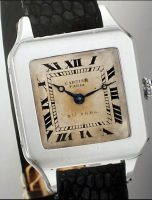
1904
Cartier Santos
Created for Alberto Santos-Dumont, it helped prove the wristwatch could be a practical tool for pilots.
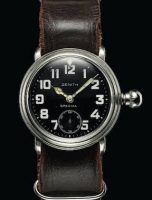
1909
Zenith And Louis Bleriot
Bleriot wore a Zenith during his English Channel flight, linking early wrist timing with aviation achievement.
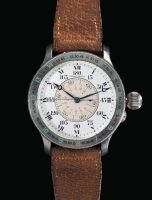
1927
Longines Lindbergh Hour Angle
Designed around navigation, it showed how a wristwatch could support pilots with more than simple timekeeping.
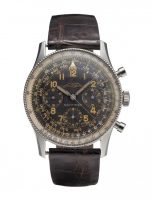
1952
Breitling Navitimer
A wrist-worn aviation calculator, combining a chronograph with a slide rule bezel for flight-related calculations.
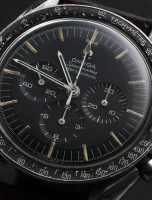
1960s
Omega Speedmaster
Originally a racing chronograph, it became inseparable from aviation and spaceflight through NASA and Apollo.
Pilot Watch Dial Design
The dial is the heart of a pilot watch. A strong pilot dial should reduce friction: big numerals, clear minute markings, hands that are easy to tell apart, and enough negative space that the watch does not feel cluttered.
The triangle at 12 o’clock is one of the classic aviation cues. It gives the wearer an immediate orientation point, especially in low light. On a simple pilot watch, this can be more useful than decorative branding or extra text.
Pilot Watch Complications Explained
Pilot watches can range from clean time-only models to complicated instruments. The right choice depends on whether you want aviation heritage, daily usefulness, or technical charm.
| Feature | What It Does | Best For |
|---|---|---|
| Time-only dial | Shows hours, minutes, and sometimes seconds | Maximum legibility |
| GMT hand | Tracks a second time zone | Travel and remote work |
| Chronograph | Times events with start, stop, and reset pushers | Timing intervals |
| Slide rule bezel | Performs calculations such as speed, distance, or fuel use | Aviation heritage and technical appeal |
| Large crown | Easier grip, historically useful with gloves | Classic pilot-watch character |
Are Pilot Watches Good Everyday Watches?
Pilot watches can be excellent everyday watches if you choose the right size. They are easy to read, usually casual without feeling too rugged, and often pair well with leather straps, textile straps, and simple bracelets.
The main tradeoff is size. Some pilot watches are intentionally large, and a huge dial can dominate a smaller wrist. If you want an everyday pilot watch, prioritize case diameter, lug-to-lug length, and thickness over historical accuracy.
Best Pilot Watches By Budget
If you already like the pilot-watch style, these guides collect specific recommendations by price range:
Pilot Watch FAQ
What is a pilot watch?
A pilot watch is an aviation-inspired watch designed for quick legibility, easy operation, and practical timing or navigation use. Common traits include a large clear dial, bold numerals, strong lume, and an easy-to-grip crown.
Do pilots still use pilot watches?
Some pilots wear them, but modern aviation relies on cockpit instruments, electronic systems, and digital timing tools. Today, most pilot watches are bought for design, heritage, travel usefulness, and everyday wear.
What is a Flieger watch?
A Flieger watch is a classic German-style pilot watch known for a highly legible black dial, large Arabic numerals, strong lume, and often a triangle marker at 12 o'clock.
Why do pilot watches have large crowns?
Large crowns were historically useful because pilots could operate them while wearing gloves. On modern watches, the oversized crown is partly functional and partly a nod to aviation-watch history.
Are pilot watches good everyday watches?
Yes, especially if the size is wearable for your wrist. Pilot watches are easy to read, casual, versatile, and often pair well with leather or textile straps.
What is the difference between a pilot watch and a GMT watch?
A pilot watch is a broad style category based on aviation legibility and cockpit heritage. A GMT watch is defined by a second-time-zone function. Some pilot watches have GMT complications, but not all GMT watches are pilot watches.
What is a slide rule bezel?
A slide rule bezel is a rotating calculation scale used for math such as speed, distance, fuel consumption, and unit conversion. It is most famously associated with aviation chronographs like the Breitling Navitimer.
What size should a pilot watch be?
Historically, pilot watches were very large, but most modern buyers are better served by something around 38mm to 42mm, depending on wrist size, lug-to-lug length, and thickness.