What Is a Racing Watch? Everything You Need to Know
A racing watch is a motorsport-inspired watch built around timing. Most racing watches are chronographs, meaning they include a stopwatch function that can measure elapsed seconds, minutes, and sometimes hours.
The category is closely tied to driving, lap timing, speed measurement, and automotive design. Even if most owners never time a race from the pit wall, racing watches remain popular because they combine technical function with bold, energetic style.
History of Racing Watches
Racing watches developed alongside the need to measure speed, lap times, and elapsed time in motorsport. Before digital timing systems became standard, a reliable chronograph could be a useful tool for drivers, teams, and event timekeepers.
The relationship between watches and racing became especially visible in the 20th century. Rolex connected its Daytona chronograph to the famous race in Florida, Heuer built a deep identity around motorsport timing, and Omega’s Speedmaster began life as a racing chronograph before becoming famous for spaceflight.
Over time, the racing watch became less about pure necessity and more about design language. Tachymeter scales, contrasting subdials, rally straps, bright accents, and dashboard-inspired layouts all helped make the category instantly recognizable.
What Makes A Watch A Racing Watch?
A racing watch is not just any sporty watch. The strongest examples usually combine a chronograph function, high legibility, motorsport design cues, and a connection to speed or timing.
Chronograph Function
The chronograph is the core feature. It works like a stopwatch controlled by pushers, usually placed above and below the crown. One pusher starts and stops timing, while the other resets the chronograph hand back to zero.
Tachymeter Scale
A tachymeter is a scale printed on the bezel or outer dial. It can estimate average speed over a known distance. Start the chronograph at the beginning of a mile or kilometer, stop it at the end, and the chronograph seconds hand points to the approximate speed on the tachymeter scale.
High-Contrast Dial
Racing watches should be easy to read quickly. Many use contrasting subdials, bold hands, bright accent colors, and clear minute or seconds tracks. This creates the energetic dashboard-like look people associate with motorsport watches.
Subdials And Pushers
Chronograph subdials track elapsed minutes, elapsed hours, or running seconds depending on the movement. Pushers add to the mechanical look and make a racing watch feel more like an instrument than a simple time-only watch.
Rally Straps And Automotive Cues
Perforated rally straps, rubber straps, tire-tread textures, carbon-fiber patterns, and bright racing colors are common. These details are not required, but they reinforce the automotive identity of the watch.
Milestone Racing Watches
The racing watch category is full of icons. These watches helped define what people picture when they think of motorsport on the wrist.
Racing watch timeline
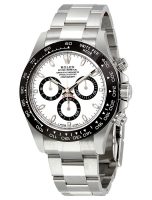
1960s
Rolex Daytona
The archetypal luxury racing chronograph, named for Daytona and forever linked to motorsport culture.
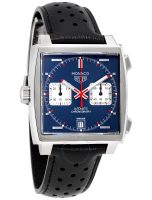
1969
Heuer Monaco
One of the first automatic chronographs, made legendary by Steve McQueen and the film Le Mans.
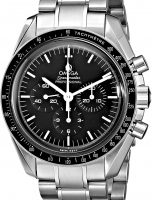
1957
Omega Speedmaster
Originally created as a racing chronograph, with a clean tachymeter layout that later went far beyond the track.
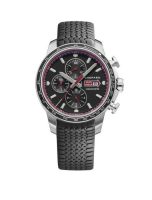
Mille Miglia
Chopard Mille Miglia
A modern racing-watch family tied directly to the historic Italian road race and classic car culture.
1963
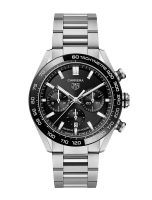
TAG Heuer Carrera
Inspired by the Carrera Panamericana, it became one of the cleanest and most influential racing chronographs.
Automotive luxury
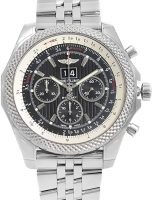
Breitling For Bentley
A bold example of direct collaboration between watchmaking and automotive luxury branding.
How To Use A Tachymeter
A tachymeter looks complicated, but the basic use is simple if you know the distance being measured.
- Start the chronograph at the beginning of a measured mile or kilometer.
- Stop the chronograph at the end of that distance.
- Read the number on the tachymeter scale where the chronograph seconds hand points.
That number is the approximate average speed over that distance. For example, if it takes 30 seconds to travel one mile, the tachymeter will indicate about 120 miles per hour.
Mechanical vs Quartz Racing Chronographs
Racing watches can be mechanical, quartz, or meca-quartz. Mechanical chronographs are more complex, more expensive, and often more collectible. Quartz chronographs are usually more affordable, accurate, and easy to maintain.
Meca-quartz watches combine quartz timekeeping with a chronograph module that gives the central chronograph hand a snappier, more mechanical feel. For many buyers, meca-quartz is a sweet spot because it delivers racing-watch style without the cost of a full mechanical chronograph.
| Type | Strength | Tradeoff |
|---|---|---|
| Mechanical chronograph | Craft, collectability, tactile feel | Higher cost and service needs |
| Quartz chronograph | Accuracy, affordability, low maintenance | Less mechanical romance |
| Meca-quartz chronograph | Affordable with a more satisfying chrono feel | Still not fully mechanical |
Are Racing Watches Good Everyday Watches?
Racing watches can be excellent everyday watches if you like a sportier look. They tend to be more visually active than dive or field watches because of the subdials, pushers, scales, and color accents.
The main tradeoffs are thickness and dial complexity. Mechanical chronographs can be thicker than simple three-hand watches, and some racing dials are busy. If you want daily versatility, look for strong contrast, restrained colors, and a case size that fits your wrist comfortably.
Best Racing Watches By Budget
If you already know you want a racing chronograph or automotive-inspired watch, these guides are the best next step:
Racing Watch FAQ
What is a racing watch?
A racing watch is a motorsport-inspired watch designed around timing. Most racing watches are chronographs with stopwatch functionality, and many include a tachymeter scale for calculating average speed.
Does a racing watch need to be a chronograph?
Usually, yes. A racing watch can use automotive styling without a chronograph, but the classic racing-watch format is built around a stopwatch function.
What is a tachymeter?
A tachymeter is a scale that can calculate average speed over a known distance. It is commonly printed on the bezel or outer dial of racing chronographs.
How do you use a racing chronograph?
Use the chronograph pushers to start, stop, and reset elapsed timing. The central chronograph hand usually tracks seconds, while subdials may track elapsed minutes or hours.
Are racing watches good everyday watches?
Yes, if you like a sporty look. The best everyday racing watches balance legibility, case comfort, and dial complexity so the watch does not feel too busy.
What is the difference between a racing watch and a dive watch?
A racing watch is built around timing and speed, usually with a chronograph and tachymeter. A dive watch is built around water resistance, underwater legibility, and elapsed-time tracking with a rotating bezel.
What is a rally strap?
A rally strap is a leather or rubber strap with perforations, inspired by driving gloves and vintage motorsport. It is a common styling detail on racing watches.
Should I buy mechanical or quartz racing watch?
Choose mechanical if you value movement craft and collectability. Choose quartz or meca-quartz if you want accuracy, lower cost, and easier maintenance.