Lorier Watches Review: The Current Range And My Picks
Lorier appeals to me because its watches have a clear sense of proportion. The designs look back to smaller, simpler sports watches, with enough variation to make the choice feel personal: a warm black-and-gold diver, a compact field watch, a dressier everyday model, and a travel GMT.
My starting point would be the Falcon. Its 36mm case and 3-6-9 dial make it the most straightforward everyday choice for my taste. I would choose the Neptune for a dive-watch look, the Astra for a lighter dial and dressier bracelet, or the Hyperion if I regularly crossed time zones.
There is an important change to understand before reading older Lorier reviews: all four current models use sapphire crystals. This guide covers the current references and their official photographs and specifications. I have not published a dedicated Lorier hands-on review, so these are my buying recommendations rather than claims from wearing or testing the watches.
Jump to my verdict, Neptune, Falcon, Astra, Hyperion, or my recommendations.
Lorier At A Glance
| What I Would Want To Know | The Short Answer |
|---|---|
| Brand origins | Founded in 2017 by Lauren and Lorenzo Ortega; based in New York City |
| Current range | Neptune, Falcon, Astra, and Hyperion |
| Case sizes | 36mm for Falcon and Astra; 39mm for Neptune and Hyperion |
| Movements | Japanese Miyota 9039 automatics; Miyota 9075 traveler GMT in the Hyperion |
| Crystals | Domed sapphire with internal antireflective coating on all four current models |
| Current USD prices | $699 for Neptune, Falcon, and Astra; $799 for Hyperion, on bracelets |
| Main consideration | These are preorders with different planned shipping dates |
Prices, specifications, and listings were checked on November 18, 2026. Neptune, Falcon, and Astra announce shipping in late December 2026; Hyperion announces January 2027. Those are Lorier’s estimated preorder dates, not a promise of immediate dispatch. The current store lists one color configuration for each model; the galleries show different views of those watches.
My Verdict: Is Lorier Worth Considering?
Yes, if compact proportions and vintage-inspired styling are what you want. I like that the four watches have distinct roles without needing a sprawling catalog. Choosing between Falcon and Astra is largely a decision about style; stepping up to Hyperion adds a useful travel complication.
The current specifications make the range easier to recommend to someone who liked Lorier’s designs but hesitated over acrylic. Sapphire crystals, screw-down crowns, and adjustable bracelet clasps address practical concerns without abandoning the small cases. I would still judge finishing, bracelet comfort, and crown or bezel feel in person; a specification list cannot settle those questions.
The tradeoffs are the wait for delivery, a 12-month warranty, and a fairly narrow choice of sizes and colors. The roughly 42-hour power reserve also means I would expect to reset a watch after leaving it off for a full weekend. If you want a large case, a wide color palette, or a watch that can ship immediately, the current Lorier range may not be the right fit.
A Brief History: A New York Brand With A Vintage Perspective
Lorier’s official introduction identifies Lauren and Lorenzo Ortega as its founders and dates the brand to 2017. It is based in New York City, with a design approach rooted in mid-century watches intended for regular use.
What I appreciate is the emphasis on watches that can move between settings. Even the Neptune has a relatively restrained case, while the Astra combines a dressier appearance with a screw-down crown and 100m water resistance. The brand’s American home and its Japanese movements are separate facts; I would not describe these as American-made watches simply because Lorier is based in New York.
What Has Changed In The Current Range?
Sapphire is the biggest distinction from older examples. Earlier Falcon, Neptune, Astra, and Hyperion coverage often discusses acrylic crystals. The current product pages specify domed sapphire with internal antireflective coating. Neptune and Hyperion also have sapphire bezel inserts. I would check the exact reference when buying secondhand, rather than apply the specifications below to every watch bearing the same model name.
The movements remain straightforward to understand. Lorier’s movement guide identifies the no-date Miyota 9039 in Neptune, Falcon, and Astra, and the Miyota 9075 in Hyperion. Both run at 28,800 vibrations per hour, allow hand-winding and hacking, and have a stated reserve of about 42 hours. Those are published specifications, not my timing measurements.
Bracelet adjustment matters as much as the headline materials. All four current listings specify solid links and end links, screw-pin sizing, and a push-button quick-adjust clasp with five microadjustment positions. The 20mm bracelets taper to 16mm at the clasp. I like seeing that adjustment provision, although I would want to try the actual clasp before judging its action or comfort.
Read the thickness figures carefully. Lorier lists the case and raised crystal separately. In the cards, I add those figures to show overall height: 11.4mm for Neptune, 10.4mm for Falcon and Astra, and 12.15mm for Hyperion. These totals are calculated from Lorier’s dimensions, not independently measured.
Neptune: My Pick For A Vintage-Style Diver
The black dial, warm gilt accents, and broad-arrow hour hand give the Neptune the strongest old-school dive-watch personality in this range. I would choose it for that combination of restrained size and a rotating timing bezel. The 39mm case surrounds a smaller 37mm bezel, which is a useful distinction when comparing its proportions with another nominally 39mm diver.

- Reference: 737080; black dial, steel bracelet
- Movement: Miyota 9039 automatic, no date; about 42 hours
- Case: 39mm; 37mm bezel; 46mm lug-to-lug
- Height: 10.3mm case + 1.1mm crystal = 11.4mm overall
- Material / Crystal: 316L steel / domed sapphire with internal AR
- Bezel / Water Resistance: 120-click unidirectional, sapphire insert / 200m
- Lug Width / Clasp: 20mm / push-button quick adjustment
- Price / Status: $699 USD; preorder, late December 2026 shipping
The current reference 737080 keeps a no-date layout and uses a 120-click unidirectional bezel with a sapphire insert. Its 200m water-resistance rating is the highest of the four current models. I would see the black-and-gold color scheme as the main attraction, while the sapphire and adjustable clasp make it more practical on paper than older examples.
The Neptune also appears in my dive watches under $1,000 guide. That earlier entry refers to the SIV generation; the card here covers the current reference, price, and crystal specification.
Falcon: My First Lorier Recommendation
The Falcon is where I would start for a watch to wear through an ordinary week. Its black 3-6-9 dial has enough personality to be interesting without a rotating bezel or an extra hand competing for attention. I also like the contrast between the broad-arrow hands and the simple numeral layout.

- Reference: 325080; black dial, steel bracelet
- Movement: Miyota 9039 automatic, no date; about 42 hours
- Case: 36mm; 44mm lug-to-lug
- Height: 8.8mm case + 1.6mm crystal = 10.4mm overall
- Material / Crystal: 316L steel / domed sapphire with internal AR
- Water Resistance: 100m; screw-down crown
- Lug Width / Clasp: 20mm / push-button quick adjustment
- Price / Status: $699 USD; preorder, late December 2026 shipping
At 36mm across and 44mm lug-to-lug, the current reference 325080 is a compact option. The overall height works out to 10.4mm, including the sapphire dome. Those dimensions make it worth considering for a smaller wrist, though bracelet fit still matters and photographs cannot establish how it will sit on yours.
I would choose Falcon over Astra for its more casual, field-watch appearance and three-link bracelet. Both cost $699 and share their movement, principal dimensions, and 100m rating, so I would make that decision on design rather than expect a significant difference in basic capability.
For wider context, the earlier Falcon SIII appears in my everyday watches under $1,000 guide and Rolex Explorer alternatives. Its older acrylic specification should not be confused with the sapphire reference shown here.
Astra: My Choice For A Dressier Everyday Watch
The Astra would be my pick if I wanted something a little more polished in appearance. The light dial, shaped markers, and five-link bracelet make it feel visually different from the Falcon, even though the underlying dimensions and movement are the same.

- Reference: 278081; light dial, steel bracelet
- Movement: Miyota 9039 automatic, no date; about 42 hours
- Case: 36mm; 44mm lug-to-lug
- Height: 8.8mm case + 1.6mm crystal = 10.4mm overall
- Material / Crystal: 316L steel / domed sapphire with internal AR
- Water Resistance: 100m; screw-down crown
- Lug Width / Clasp: 20mm / push-button quick adjustment
- Price / Status: $699 USD; preorder, late December 2026 shipping
The current reference 278081 has no date, which suits the clean dial. I think this is the most natural Lorier choice to pair with a shirt or jacket, but its 100m rating and screw-down crown keep the specification from being limited to formal occasions.
I would pay attention to generation when researching the Astra. Older Cosmic Blue listings and earlier prices still appear in buying guides; the current official store shows this light-dial, sapphire-crystal model at $699. I would compare it with Falcon by looking at the dial and bracelet photographs, rather than assume that the dressier appearance means it has a weaker everyday specification.
Hyperion: My Recommendation For Travel
The Hyperion is the one I would choose if changing time zones were a regular part of my life. Its dark dial, gilt accents, and red-and-blue bezel give it a familiar vintage GMT character, but the useful distinction is how its local hour hand works.

- Reference: 897080; black dial, steel bracelet
- Movement: Miyota 9075 automatic GMT with date; about 42 hours
- Case: 39mm; 37mm bezel; 46mm lug-to-lug
- Height: 10.7mm case + 1.45mm crystal = 12.15mm overall
- Material / Crystal: 316L steel / domed sapphire with internal AR
- Bezel / Water Resistance: 24-click bidirectional, sapphire insert / 100m
- Lug Width / Clasp: 20mm / push-button quick adjustment
- Price / Status: $799 USD; preorder, January 2027 shipping
The Miyota 9075 lets the local hour hand jump independently in one-hour steps while the watch keeps running. That is the traveler or flyer GMT arrangement: I can set local time after a flight while the 24-hour hand retains my reference time. The date follows the local hour hand. Lorier explains the operation in its Hyperion guide.
The current reference 897080 also has a 24-click bidirectional bezel with a sapphire insert. It shares the Neptune’s 39mm case width and 46mm lug-to-lug length, but is thicker at a calculated 12.15mm overall and has a 100m rating. I would choose between them by function: Hyperion for a second time zone, Neptune for elapsed-time use and its dive-watch specification.
At $799, Hyperion costs $100 more than the three-hand models. That is the upgrade I would make for a travel need, rather than buy the extra hand simply because it is available. My GMT watches under $1,000 guide includes the earlier Hyperion SII; its acrylic-era details differ from the current watch.
What About Hydra, Olympia, And Other Earlier Models?
Lorier’s earlier range also included names such as Hydra, Olympia, Merlin, and Roosevelt, alongside color versions including Hyperion Skyward and Astra Cosmic Blue. They remain relevant when reading older articles or shopping pre-owned, but they are absent from the current four-model watch collection.
I would treat them as earlier releases rather than current ordering options, without assuming that every name is permanently discontinued. The Olympia, for example, appears in my Omega Speedmaster alternatives guide; that is useful historical context, not evidence that Lorier currently offers it for sale.
My Lorier Recommendations
| What You Want | Where I Would Start | Why |
|---|---|---|
| A first Lorier | Falcon | A compact, clear everyday design |
| A vintage-style diver | Neptune | Warm dial details, timing bezel, and 200m rating |
| A dressier everyday watch | Astra | Light dial and five-link bracelet at the Falcon’s size |
| A watch for changing time zones | Hyperion | Independently adjustable local hour hand |
| A smaller case | Falcon or Astra | 36mm diameter, 44mm lug-to-lug, and 10.4mm calculated overall height |
What I Would Check Before Ordering
Start with the delivery estimate. The current listings are preorders. I would read the model’s shipping notice immediately before paying, especially if it is intended as a gift. A collection filter or an enabled order button does not mean the watch is ready to dispatch.
Check the reference, not just the name. That matters for the crystal, dimensions, bracelet, price, and sometimes the movement. Lorier says the original Hyperion used Soprod C125 before the move to Miyota 9075 from Series II onward. I would not apply the current travel-GMT behavior to every earlier Hyperion automatically.
Keep the return conditions in mind when trying it on. The refund policy requires a return to be initiated within 14 days of delivery, with the watch new and unworn, in its original packaging, and with the bracelet’s plastic wrap intact. Return shipping is the customer’s responsibility. I would confirm the return-arrival deadline when arranging it with Lorier, before removing protective wrapping or wearing the watch outside.
The store policies provide a 12-month warranty from delivery for covered material or workmanship defects. The customer pays shipping to the service center; Lorier covers return shipping for an approved claim. Normal wear, misuse, and sapphire damage are among the exclusions. U.S. orders of $50 or more qualify for free shipping; international taxes, duties, and any destination exceptions should be checked at checkout.
Other Brands I Would Compare
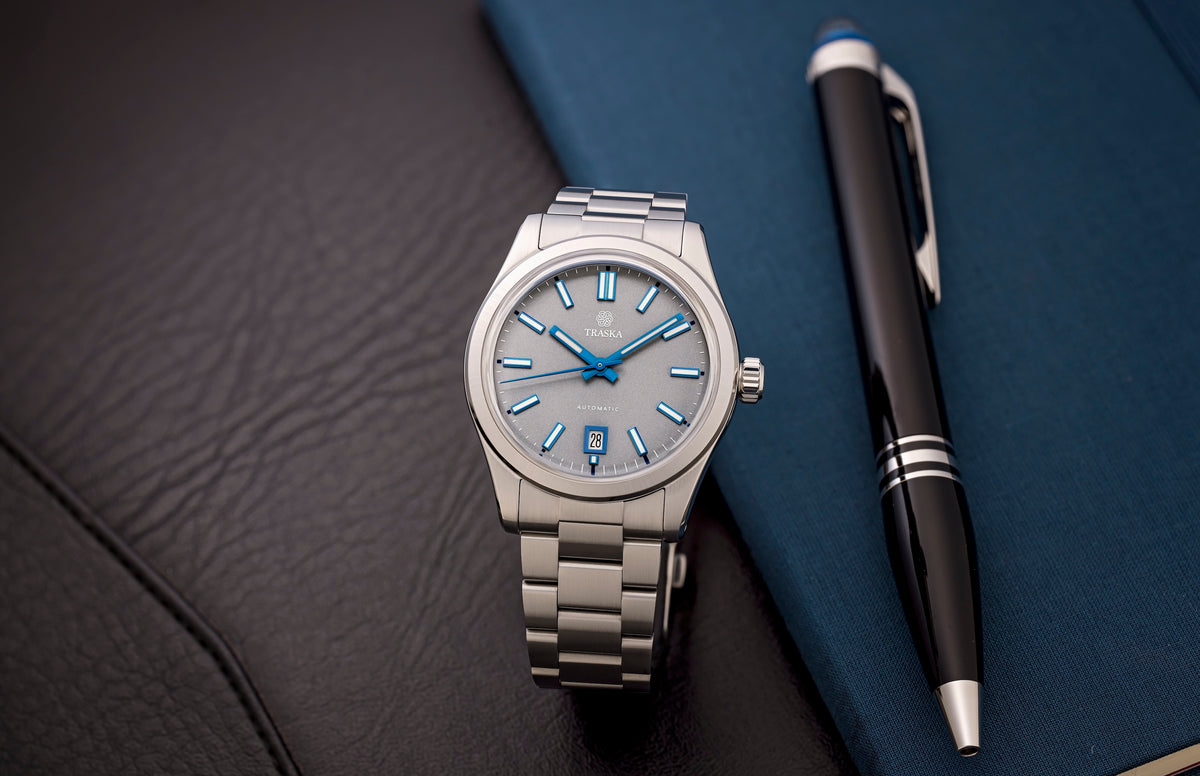
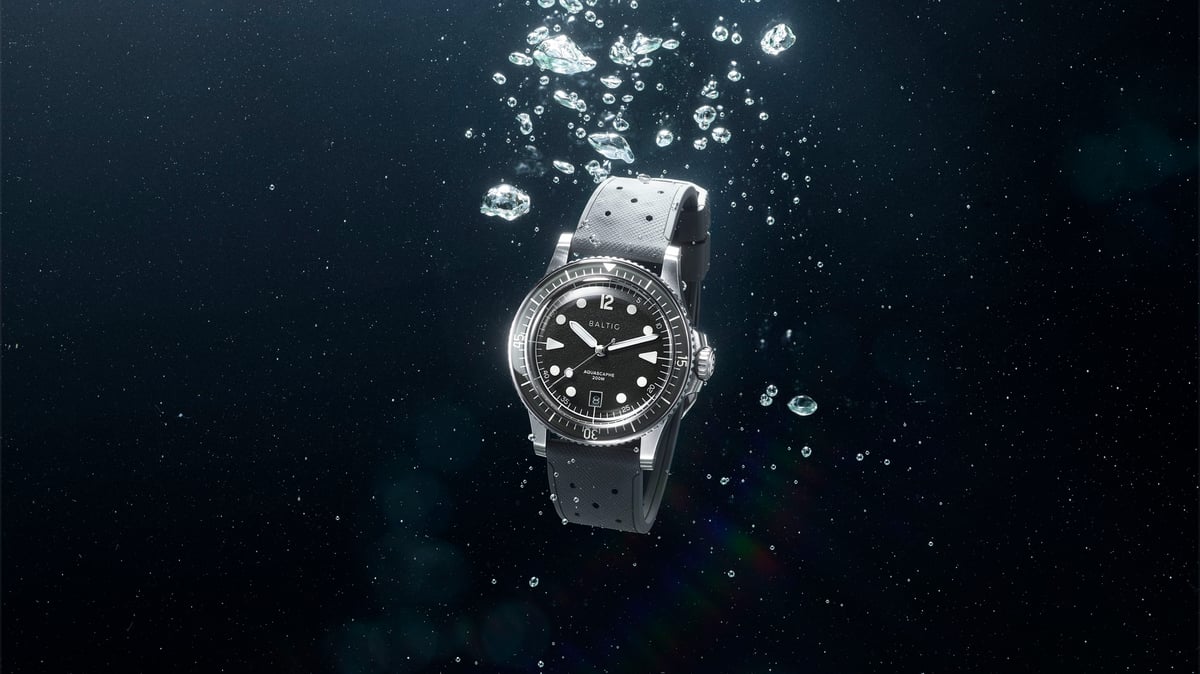
I would put Lorier beside Baltic for another take on vintage-inspired designs, Traska for its hardened steel and wider choice of everyday-watch variants, and Serica for a different interpretation of compact tool watches. My vintage-inspired watch guide offers a broader comparison, including the earlier Falcon.
Frequently Asked Questions
Is Lorier an American watch brand?
Lorier is a New York City-based brand founded in 2017 by Lauren and Lorenzo Ortega. The current watches use Japanese Miyota automatic movements. I would distinguish the brand’s American home from a claim that the complete watches are manufactured in the USA.
Does Lorier still use acrylic crystals?
The four current references in this guide use domed sapphire crystals with internal antireflective coating. Neptune and Hyperion also have sapphire bezel inserts. Earlier generations used acrylic, so I would check the exact reference when buying an older watch.
Which movements do current Lorier watches use?
Neptune, Falcon, and Astra use the no-date Miyota 9039. Hyperion uses the Miyota 9075 GMT with date. Lorier lists about 42 hours of power reserve, hand-winding, hacking, and a 28,800-vph beat rate for both calibers.
Is the Lorier Hyperion a traveler GMT?
The current Hyperion reference 897080 uses Miyota 9075, allowing the local hour hand to jump independently in one-hour steps while the watch keeps running. The date follows that hand. The original C125-powered Hyperion had a different movement, so I would check older examples individually.
Which Lorier would I consider for a smaller wrist?
I would start with Falcon or Astra. Both measure 36mm across and 44mm lug-to-lug. Adding Lorier’s separately listed 8.8mm case and 1.6mm crystal gives 10.4mm overall height. My choice between them would come down to the Falcon’s field-watch style or the Astra’s dressier dial and bracelet.
Are the current Lorier watches ready to ship?
The product pages checked on November 18, 2026 describe preorders. Neptune, Falcon, and Astra announce late December 2026 shipping; Hyperion announces January 2027. These are estimated dates from Lorier, and I would check the current model page before ordering.
What warranty and return period does Lorier offer?
Lorier lists a 12-month warranty from delivery for covered material or workmanship defects. Returns must be initiated within 14 days of delivery, with the watch new and unworn, in original packaging, and with the bracelet’s plastic wrap intact. The customer pays return shipping and shipping to the warranty service center; Lorier covers return shipping for an approved warranty claim.