What Is a GMT Watch? Everything You Need to Know
A GMT watch is a watch that can show a second time zone, usually with an additional 24-hour hand and a 24-hour scale on the bezel, dial, or rehaut.
The category is closely tied to travel, aviation, remote work, and life across multiple time zones. A good GMT watch can be practical, stylish, and surprisingly easy to use once you understand what the extra hand is doing.
History of GMT Watches
GMT stands for Greenwich Mean Time, the time standard historically tied to the Royal Observatory in Greenwich, London. For maritime navigation, railways, aviation, and global communication, a shared reference time became essential because local time alone was not enough.
The watch category became famous in the jet age. In the 1950s, long-haul commercial aviation made it more common for pilots and passengers to cross several time zones in a single trip. The Rolex GMT-Master, developed with Pan Am and launched in the mid-1950s, became the archetype: a fourth 24-hour hand, a rotating 24-hour bezel, and the ability to read home time and local time at once.
Modern GMT watches are no longer just pilot tools. They can be dive watches, dress watches, field watches, integrated-bracelet sports watches, or worldtimer-style travel watches. The function remains simple: keep one eye on where you are and one eye on somewhere else.
How Does A GMT Watch Work?
Most GMT watches use an extra hand that completes one full rotation every 24 hours. Instead of reading that hand against the normal 12-hour markers, you read it against a 24-hour scale.
For example, if the GMT hand points to 18 on the 24-hour scale, the second time zone is 6:00 PM. If it points to 6, the second time zone is 6:00 AM. This avoids the AM/PM confusion that can happen when tracking another country on a normal 12-hour dial.
The GMT Hand
The GMT hand is usually a different color or shape so it stands apart from the hour and minute hands. Red, orange, yellow, blue, and arrow-tipped hands are common because they are easy to spot at a glance.
The 24-Hour Scale
The 24-hour scale can live on a rotating bezel, a fixed bezel, the chapter ring, the inner dial, or a city disc. A rotating bezel can add flexibility because it may let you temporarily read a third time zone.
The Date
Many GMT watches include a date window because the function is travel-focused. On the best examples, the date should be easy to adjust and should not make the dial feel crowded.
Caller GMT vs Traveler GMT
Not all GMT watches work the same way. The two common types are caller GMT and traveler GMT.
| Type | What adjusts independently | Best for |
|---|---|---|
| Caller GMT | The 24-hour GMT hand | Tracking someone else’s time zone from home |
| Traveler GMT | The local 12-hour hand | Crossing time zones frequently |
A caller GMT is often more affordable and is excellent if you work with overseas teams, follow another market, or have family abroad. You set the GMT hand to the other time zone and mostly leave your local hands alone.
A traveler GMT is usually more convenient for actual travel. When you land, you jump the local hour hand forward or backward without disturbing the minutes, seconds, or home-time hand. That makes it easier to change local time quickly while keeping home time steady.
Milestone GMT Watches
The GMT category has a few clear milestones, from the jet-age icon to modern affordable options that made the complication more accessible.
GMT watch timeline
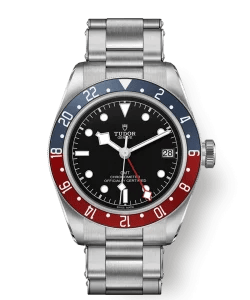
1950s
Rolex GMT-Master
The jet-age blueprint: a 24-hour hand, rotating bezel, and instantly recognizable travel-watch identity.
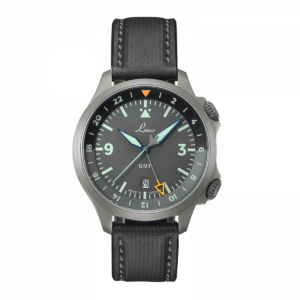
Pilot style
Aviation GMT Watches
Pilot-inspired GMT watches connect the complication to cockpit legibility, navigation, and long-distance travel.
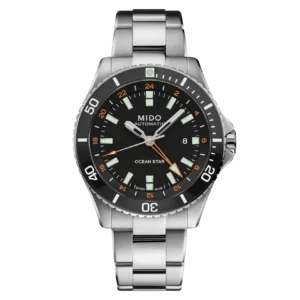
Dive GMT
GMT Dive Watches
Dive-style GMT watches add travel utility to a rugged case, making them practical vacation and daily-wear tools.
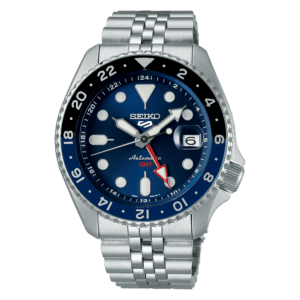
Accessible GMT
Seiko 5 Sports GMT
The Seiko 5 GMT helped make automatic GMT watches feel far more approachable for everyday buyers.
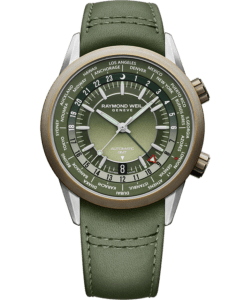
Worldtimer style
GMT Worldtimers
City-ring and worldtimer-style GMT watches are more romantic, more visual, and often dressier than pure tool GMTs.
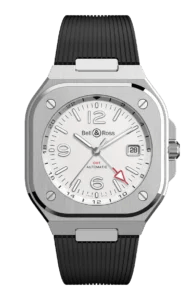
Modern luxury
Integrated GMT Watches
Modern GMTs can be sleek, urban, and elegant rather than only rugged or aviation-inspired.
GMT Watch vs Worldtimer
GMT watches and worldtimers are related, but they are not the same.
| Type | What it shows | Best for |
|---|---|---|
| GMT watch | Usually two time zones, sometimes three with a bezel | Simple travel and daily second-time-zone tracking |
| Worldtimer | Many time zones using a city ring and 24-hour display | Frequent global reference and watch-enthusiast charm |
| Dual-time watch | Two time zones, often with a second subdial or digital display | Clean, simple second-time-zone use |
If you want the easiest everyday solution, choose a GMT watch. If you love seeing the world on the dial and checking multiple cities at once, a worldtimer may be more exciting.
GMT Watch vs Pilot Watch vs Dive Watch
A GMT is a function, while pilot and dive watches are style categories. That is why a GMT watch can also be a pilot watch, dive watch, field watch, or dressier travel watch.
| Category | Defined by | Common GMT overlap |
|---|---|---|
| GMT watch | A second-time-zone function | Travel, aviation, remote work |
| Pilot watch | Aviation-inspired legibility and cockpit heritage | GMT hands, slide-rule bezels, large dials |
| Dive watch | Water resistance and elapsed-time tracking | GMT bezels, robust cases, vacation-ready utility |
The right choice depends on how you wear watches. If you want one watch for flights, beach trips, and daily casual wear, a dive-style GMT makes a lot of sense. If you want something cleaner for office travel, look for a slimmer travel GMT or worldtimer.
Are GMT Watches Good Everyday Watches?
Yes. GMT watches can be excellent everyday watches because the complication is useful without being too specialized. Unlike a chronograph or dive bezel, a second time zone can matter in normal life: travel, remote teams, family abroad, market hours, sports broadcasts, or simply knowing whether it is too late to call someone.
The main tradeoff is dial complexity. Some GMT watches are clean and subtle, while others have colorful bezels, city names, large arrows, and extra markings. If you want maximum versatility, choose a GMT with a clear dial, wearable case size, and a 24-hour scale that does not overpower the watch.
Best GMT Watches By Budget
If you already know you want a GMT watch or worldtimer, these guides are the best next step:
GMT Watch FAQ
What is a GMT watch?
A GMT watch is a watch that can display a second time zone, usually with an extra 24-hour hand and a 24-hour scale on the dial or bezel.
What does GMT stand for?
GMT stands for Greenwich Mean Time, the historical time standard tied to Greenwich, London. In modern use, many people use GMT casually when referring to UTC or a reference time zone.
How do you read a GMT watch?
Read the normal hour and minute hands for local time. Read the GMT hand against the 24-hour scale for the second time zone.
What is the difference between a caller GMT and a traveler GMT?
A caller GMT lets you independently set the 24-hour GMT hand. A traveler GMT lets you independently jump the local hour hand, which is more convenient when crossing time zones.
Can a GMT watch track three time zones?
Yes, some GMT watches can track three time zones if they have a rotating 24-hour bezel. The main hands show local time, the GMT hand shows one reference time, and the bezel can be offset for another time zone.
Is a GMT watch the same as a worldtimer?
No. A GMT watch usually tracks one extra time zone, while a worldtimer is designed to show many time zones at once using a city ring and 24-hour display.
Are GMT watches good for everyday wear?
Yes. GMT watches are useful, versatile, and often easy to wear daily, especially if you travel, work with people abroad, or want a practical sports watch with extra functionality.
Do I need a true GMT movement?
Not necessarily. A true or traveler GMT is more convenient for frequent travel, but a caller GMT is often less expensive and works very well for tracking another time zone from home.
Why do GMT watches use a 24-hour hand?
The 24-hour hand prevents AM/PM confusion when reading another time zone. If the hand points to 18, you know the second time zone is 6:00 PM, not 6:00 AM.