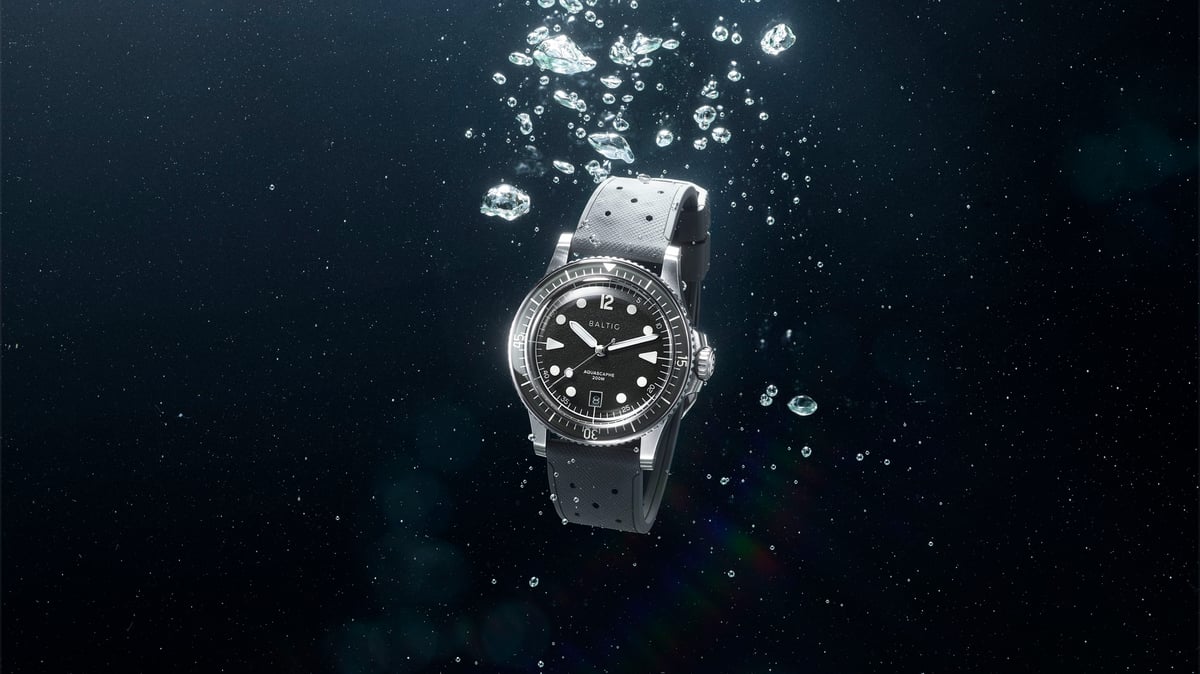
Baltic Watches Review: Collections, Quality, And My Picks
Baltic is the kind of brand that makes me linger over the details: a small seconds display placed slightly off-center, a warm dial under a domed crystal, or a dive watch that leaves a little breathing room on the wrist. The designs have a clear affection for older watches, but there is enough variety here to make choosing one surprisingly difficult.
My starting points would be the Hermétique Tourer for everyday use, Aquascaphe MK2 for a diver, and MR Classic for something dressier. This guide covers all 12 collections currently listed by Baltic, with a watch card for each and galleries showing the current colors and related versions. My recommendations are based on the designs, published specifications, and prices; this is a researched buying guide, not a claim that I have worn or tested these watches.
Jump to Hermétique, Aquascaphe Classic, Aquascaphe MK2, GMT MK-II, Bronze, Dual-Crown, Titanium, HMS, MR, Prismic, Heures du Monde, Scalegraph, or my recommendations.
Baltic At A Glance
| What I Would Want To Know | The Short Answer |
|---|---|
| Background | French brand founded by Étienne Malec in 2016 |
| Assembly | Baltic says its watches are assembled and adjusted in Besançon, France, using internationally sourced components |
| Design focus | Vintage-inspired proportions, textured dials, and a broad choice of colors |
| Movements | Supplied Japanese, Chinese, and Swiss calibers; automatic and manual-wind options |
| Current starting prices | €385 for HMS through €1,635 for the newer Scalegraph; selected straps and bracelets cost more |
| My everyday starting point | Hermétique Tourer Beige |
| Main tradeoffs | Different movements within related ranges, hesalite on HMS/MR, and delivery waits on some configurations |
Prices are Baltic’s displayed EUR prices checked November 9, 2026. I distinguish collection starting prices from the pictured configuration where they differ. The final price, taxes, and delivery depend on the destination and options selected. Product links lead directly to Baltic.
My Verdict: Are Baltic Watches Worth Considering?
Yes, particularly if proportions and dial design matter more to you than a familiar luxury logo. I like how the range moves from simple field watches to micro-rotor dress watches and stone-dial worldtimers without losing its visual identity. A buyer with a smaller wrist also has several distinct designs to compare, from the 36mm MR to the 37mm Hermétique and Aquascaphe MK2.
I would choose carefully by collection. An MR is appealing for its small seconds layout and thin case, but its 30m rating and hesalite crystal make it a different proposition from a 200m Aquascaphe. A higher price might buy a Swiss chronograph movement, a stone dial, or a particular case construction; it does not automatically mean a longer reserve or greater water resistance.
A French Brand With A Personal Beginning
In Baltic’s account of its beginnings, Étienne Malec describes discovering his late father’s watch collection and the diary documenting it. He founded Baltic in 2016, choosing a name connected to his father’s roots on Poland’s northern coast. That gives the vintage inspiration a personal explanation without pretending this is a revived nineteenth-century manufacture.
Baltic describes assembly and adjustment in Besançon, France, with the majority of components produced in Hong Kong and other production spread across its suppliers. I would call it a French brand with French assembly and international sourcing. The movement inside an individual watch can be Japanese, Chinese, or Swiss.
How To Read The Watch Cards
Each card starts with my representative choice. The gallery shows related colors, materials, or sizes, and clicking the large photograph opens the pictured configuration. The specification list stays with the named representative; important differences between versions are explained alongside it. The collection button lets you compare other strap options.
Several pictured configurations can be ordered with a future delivery estimate. The estimates below were checked for the linked variants, including their straps, and can change. The sold-out Hermétique The Rift is discussed separately.
Hermétique: My Everyday Starting Point
The Hermétique is where I would begin if I wanted a Baltic for an ordinary week. I like the compact diameter, recessed crown, and clear separation between the central dial and outer track. My pick is Tourer Beige: its warm dial and matching rubber strap give it personality without demanding an outfit built around the watch.

- Featured Model: Tourer Beige on matching rubber
- Movement: Miyota 9039 automatic; 42-hour reserve
- Case: 37mm; 46mm lug-to-lug; 10.8mm thick
- Crystal / Water Resistance: Sapphire / 150m
- Material: 316L steel; Tourer Bronze uses CuAl8 bronze
- Prices: Steel Tourer/Summer from €550; pictured Beige €550; Bronze €600
The gallery covers Tourer in Beige, Green, Blue, and Brown; Summer in Pink, Turquoise, Orange, and Yellow; and Tourer Bronze in Green, Brown, and Blue. Summer changes the dial treatment and colors; Bronze changes the case material as well. All of these use the 37mm format and Miyota 9039.
I would choose steel for a consistent appearance, or bronze if I specifically wanted the surface to develop patina. The linked Orange Summer shows early December delivery; Bronze Green shows late November, with Bronze Brown and Blue showing early December. The 34mm and 37mm Hermétique The Rift are currently marked sold out, so I have kept them out of the buying gallery.
Aquascaphe Classic: The Familiar Baltic Diver
The Classic is the Baltic I would show someone who wanted to understand the brand’s dive-watch appeal. The blue-and-gold combination, domed crystal, and restrained dial have an easy charm. Blue Gilt would be my choice over Black Gilt because the sunray dial brings a little more variation to the design.

- Featured Model: Classic Blue Gilt on black rubber
- Movement: Miyota 9039 automatic; 42-hour reserve
- Case: 39mm; 47mm lug-to-lug; 13mm thick
- Crystal / Bezel Insert: Double-domed sapphire / sapphire
- Water Resistance: 200m; screw-down crown
- Price: From €600; pictured rubber configurations €600
There are currently two Classic colors: Blue Gilt and Black Gilt. The linked Black Gilt configuration shows early December delivery. I would compare both with the MK2 before ordering: the Classic makes most sense when this particular dial and case appeal to you. Its 13mm total thickness also deserves attention if you imagine “vintage-inspired” automatically means very thin.
Aquascaphe MK2: My First Dive-Watch Recommendation
The MK2 would be my default Baltic diver recommendation because it gives me more useful choices: 37mm or 39.5mm, with or without a date. I also like the stronger markers and crown guard. The featured Blue has a date; I would choose the no-date version if dial symmetry mattered more to me than convenience.

- Featured Model: Blue, 39.5mm, date, on blue rubber
- Movements: Miyota 9015 with date / 9039 without date; 42 hours
- Case Options: 37mm × 45mm lug-to-lug / 39.5mm × 47mm
- Thickness / Crystal: 12.9mm including the domed sapphire
- Bezel / Water Resistance: Sapphire insert / 200m
- Prices: From €630 without date; pictured Blue date configuration €655
Both sizes come in Blue, Warm Silver, Grey, and Green. The gallery shows all eight size/color listings, with a mixture of date and no-date configurations, matched to the linked photographs. The movement changes with that choice: 9015 with a date, 9039 without.
The linked 39.5mm Blue date model shows mid-November delivery, while the pictured 37mm Blue no-date model shows mid-December. I would try both sizes if possible: a 2.5mm diameter difference can matter, and the 37mm version also shortens the lug-to-lug measurement by 2mm.
Aquascaphe GMT MK-II: My Travel Choice
This is the current GMT MK-II, which uses a Miyota 9075 rather than the Soprod movement found in the earlier Aquascaphe GMT. Its local hour hand adjusts independently, making it the Baltic I would pick for changing time zones. The red-and-blue bezel is my favorite of the four combinations.

- Featured Model: Red bezel, black dial, beads-of-rice bracelet
- Movement: Miyota 9075 automatic traveler GMT; 42 hours
- Case: 39.5mm; 47mm lug-to-lug; 13.8mm thick
- Crystal / Bezel: Sapphire / bidirectional 24-hour sapphire insert
- Water Resistance: 200m
- Prices: From €850; pictured bracelet configurations €915
The Blue, Red, Grey, and Green names describe the bezel treatments; the featured dials are glossy black. All four gallery photographs show the beads-of-rice bracelet, priced above the collection’s starting figure. Blue shows early December delivery and Grey mid-December for those linked configurations.
At 13.8mm, this is thicker than the three-hand MK2. I would accept that for a useful travel complication, but would not choose it simply because adding another hand sounds like better value.
Aquascaphe Bronze: For A Warmer-Looking Diver
The Bronze is the Aquascaphe I would choose for its material rather than an upgrade in specifications. I like how Blue Gilt pairs a blue dial with the warm case and engraved bronze bezel. The largely familiar dimensions and 9039 movement keep the decision focused on appearance.

- Featured Model: Blue Gilt on blue rubber
- Case / Bezel: CuAl8 bronze / rotating bronze bezel
- Movement: Miyota 9039 automatic; 42-hour reserve
- Dimensions: 39mm; 47mm lug-to-lug; 13mm thick
- Crystal / Water Resistance: Sapphire / 200m
- Price: €645 for each pictured configuration
The alternatives are Brown and Black; the linked Brown configuration shows mid-December delivery. Bronze changes its surface appearance with use and exposure, which is part of the attraction but also a reason to choose steel if you want a consistent finish. I would prefer the Bronze to the Classic only if that evolving character was something I actively wanted.
Aquascaphe Dual-Crown: The Cleaner Bezel Outline
The Dual-Crown has the most distinctive outline among Baltic’s steel divers. Moving the rotating scale inside the crystal leaves a smooth outer bezel, while the second crown makes the design easy to recognize. Blue would be my pick: the dial and matching strap work particularly well with that clean case.

- Featured Model: Blue on blue rubber
- Movement: Miyota 9039 automatic; 42-hour reserve
- Case: 39mm; 47mm lug-to-lug; 11.9mm thick
- Crystal / Bezel: Sapphire / internal bidirectional rotating bezel
- Water Resistance: 200m
- Price: From €670; all pictured rubber configurations €670
The range also includes Black in steel and Black PVD. The linked steel Black shows early December delivery. At 11.9mm, this is thinner on paper than the Classic, though I would still want to see how the two crowns sit on my wrist. Its internal bezel is bidirectional, a practical distinction from the external unidirectional bezels elsewhere in the Aquascaphe range.
Aquascaphe Titanium: The Larger, Lighter Case Option
I would look at Titanium if I liked Baltic’s divers but wanted a larger dial and a titanium case. Its 41mm diameter is the largest in this guide, while the 47mm lug-to-lug stays relatively restrained. Blue is my choice; Black is the quieter alternative.

- Featured Model: Blue on blue rubber
- Case: Titanium; 41mm; 47mm lug-to-lug; 13.3mm thick
- Manufacturer’s Case Weight: 55g; not the complete watch-and-strap weight
- Movement: Miyota 9039 automatic; 42-hour reserve
- Crystal / Bezel Insert: Sapphire / brushed ceramic
- Water Resistance / Price: 300m / €730
Both colors are pictured at €730 on rubber. The 300m rating and ceramic insert distinguish this collection, but my reason for choosing it would be the combination of material and proportions. Baltic’s quoted 55g is the case weight, so I would not repeat that as the weight of a complete watch on its strap.
HMS: The Most Affordable Starting Point
HMS would be my recommendation for someone who wants Baltic’s vintage character at the lowest starting price. I would choose the 003 Silver Blue for its smaller diameter and contrast between the dial and hands. The 60-hour Miyota 8315 also gives it a longer stated reserve than many more expensive Baltics.

- Featured Model: HMS 003 Silver Blue on navy leather
- Movement: Miyota 8315 automatic; 60-hour reserve
- HMS 003: 36.5mm diameter; 46mm lug-to-lug
- HMS 002: 38mm diameter; 47mm lug-to-lug
- Thickness / Crystal / Water Resistance: 13mm / hesalite / 50m
- Price: From €385; each pictured leather configuration €385
The 002 comes in Silver, Blue Gilt, Black, and Gold PVD Black; the smaller 003 offers Salmon, Blue Gilt, and Silver Blue. Both are 13mm thick including the domed hesalite, so the smaller diameter does not make the 003 a particularly thin watch.
The linked navy-strap Silver Blue, 002 Silver, and 002 Blue Gilt configurations show late November delivery; 002 Black shows early December. The pictured 003 Salmon and Blue Gilt show late February 2027. I would compare strap options if timing mattered. Hesalite provides the vintage look, with less scratch resistance than sapphire.
MR: My Pick For A Dressier Baltic
The MR is the collection I find most charming. The small seconds display sits off-center, and the micro-rotor movement allows a slim automatic watch with an interesting view through the back. Classic Salmon would be my pick for its warm dial and flowing numerals.

- Featured Model: MR Classic Salmon on navy leather
- Movement: Hangzhou CAL5000a micro-rotor automatic; 42 hours
- Case: 36mm; 44mm lug-to-lug; 9.9mm thick
- Crystal: High-domed hesalite; visible movement through the back
- Water Resistance: 30m
- Price: From €545; each pictured leather configuration €545
Classic offers Salmon, Blue, Silver, and Gold PVD Black. Roulette changes the dial design and comes in Blue, Salmon, Silver, and Black. The gallery covers both styles; the 36mm format, movement, and 30m rating remain the same.
I would treat this as a dressier watch, with hesalite and limited water resistance among the tradeoffs. The pictured Classic Salmon and Blue, plus Roulette Blue and Silver, show late November delivery with their linked leather straps. Other strap selections may have different lead times.
Prismic: Textured Dials Or Natural Stone
Prismic is where I would look for a more elaborate dress watch. The standard models combine different dial textures with a small seconds display; the Stone models let the natural material do the talking. My starting choice is standard Salmon on mesh, which keeps the quieter dial layout and thin profile.

- Featured Model: Standard Prismic Salmon on mesh
- Case: 36mm; 44mm lug-to-lug; 9.2mm thick
- Materials: Grade 5 titanium case body with stainless-steel elements
- Standard Movement: Manual ETA Peseux 7001; 42 hours
- Stone Movement: Manual La Joux-Perret D100; 50 hours
- Crystal / Water Resistance: Sapphire / 30m
- Prices: Standard from €990 (€1,050 on mesh); Stone from €1,300
Standard Prismic comes in Purple, Grey Blue, Salmon, and Green, using the manually wound Peseux 7001. Stone is mechanically different: Pietersite, Pink Albite, Dumortierite, and Bloodstone use the manual La Joux-Perret D100 with 50 hours of reserve. All share the steel/titanium case construction, but a Stone is more than a different dial on the same movement.
The pictured mesh configurations cost €1,050 for standard Prismic, €1,360 for Pink Albite/Dumortierite/Bloodstone, and €1,510 for Pietersite. Leather starting prices are lower. Purple on mesh shows early December delivery; Grey Blue shows late January 2027. I would choose Stone for the individual dial pattern, while accepting that the delivered stone will not look identical to a catalog photograph.
Heures du Monde: Travel Time With A Stone Dial
Heures du Monde would be my choice for someone who enjoys the idea of world time as much as the practical need to check another zone. Labradorite is my favorite of its three stone dials, with Tiger Eye and Sodalite offering warmer brown and deeper blue alternatives.

- Featured Model: Labradorite on grey leather
- Movement: Soprod C125 GMT automatic; 42-hour reserve
- Display: Rotating 24-hour disc with city-time-zone bezel
- Case: 37mm; 45mm lug-to-lug; 11.3mm thick
- Crystal / Bezel: Sapphire / brushed ceramic
- Water Resistance / Price: 100m / from €1,300; pictured leather €1,300
- Linked Configurations: Estimated delivery late January 2027
A rotating 24-hour disc works with the city bezel to show time across zones. Inside is a Soprod C125, distinct from the traveler-style Miyota 9075 in the GMT MK-II. I would choose this for the display, stone dial, and smaller 37mm case; the Aquascaphe GMT remains my more straightforward travel pick.
All three pictured leather configurations show late January 2027 delivery. Baltic also describes an initial numbered run followed by permanent-collection availability, so I would not assume every order will receive a numbered first-series watch.
Scalegraph: The Hand-Wound Chronographs
Scalegraph is the collection I would consider if winding a chronograph each morning was part of the pleasure. The Swiss SW510-M and 63-hour reserve give it a different proposition from Baltic’s simpler automatics. Champagne on beads-of-rice is my pick for its relatively understated color scheme.

- Featured Model: Champagne on beads-of-rice bracelet
- Movement: Manual Sellita SW510-M chronograph; 63 hours
- Diameter / Lug-To-Lug: 39.5mm / 47mm
- Newer Scalegraph: 14.1mm thick; 100m water resistance
- Scalegraph Classic: 13.5mm thick; 50m water resistance
- Crystal / Bezel Insert: Sapphire / aluminum
- Prices: Newer models from €1,635 (€1,700 pictured); Classic from €1,585 (€1,645 pictured)
The newer Champagne, Blue, and Grey models have a 14.1mm case and 100m rating. Classic Panda and Reverse Panda are 13.5mm thick and rated to 50m. Both branches are pictured, but those dimensions and ratings should not be treated as interchangeable.
I would choose the Classic for the high-contrast panda dial, or the newer range for its dial options and revised specifications. Either is a noticeable step up in price and thickness from an HMS or MR, so this is a choice I would make because I wanted a mechanical chronograph.
Which Baltic Would I Choose?
| If I Wanted… | My Starting Pick | The Tradeoff I Would Consider |
|---|---|---|
| An everyday watch | Hermétique Tourer Beige | Compact dimensions and a recessed crown need to suit my preferences |
| A versatile diver | Aquascaphe MK2 | Choose size and date option before comparing prices |
| A travel watch | Aquascaphe GMT MK-II Red | Thicker than the three-hand diver |
| The lowest entry price | HMS 003 Silver Blue | Hesalite and a relatively tall domed profile |
| A small dress watch | MR Classic Salmon | 30m rating and hesalite |
| A more elaborate dress watch | Prismic Salmon | Manual winding and a higher price |
| A distinctive travel display | Heures du Monde Labradorite | Delivery wait and a busier dial |
| A mechanical chronograph | Scalegraph Champagne | Higher price and a 14.1mm case |
For a first Baltic, I would keep the decision between Hermétique and Aquascaphe MK2. They give me the clearest everyday choices. If I already had those needs covered, MR Classic would be the watch most likely to pull me in a different direction.
Buying, Delivery, And Aftercare
I would check the exact strap, size, and date selection before paying. A collection’s starting price may show a leather or rubber option while its photograph shows a more expensive bracelet. Likewise, changing the strap can change the delivery estimate. That matters particularly for the HMS, MR, GMT, Prismic, and Heures du Monde configurations discussed above.
Baltic lists a two-year warranty, with exclusions for wear and damage from misuse. Its published return process allows a request within 14 days of delivery for unused items in their original packaging, subject to its conditions. I would keep the receipt and check the current returns and warranty terms, particularly before sizing a bracelet or wearing the watch outside.
For a comparison with other approaches to accessible enthusiast watches, I would read my YEMA brand review and MAEN brand review. Their different case styles and movement choices help put Baltic’s appeal into context.
Baltic Watches FAQ
Where are Baltic watches made?
Baltic is a French brand founded by Étienne Malec in 2016. It says its watches are assembled and adjusted in Besançon, France, with most components produced in Hong Kong. The movements come from Japanese, Chinese, and Swiss suppliers, depending on the model.
Which Baltic would I recommend as a first watch?
I would begin with the Hermétique Tourer for everyday use or the Aquascaphe MK2 for a diver. HMS is my lower-priced alternative, while MR Classic is my starting point for a small, dressier watch.
Do all Baltic watches use the same movement?
No. The range includes Miyota automatics, the Hangzhou micro-rotor in MR, Soprod in Heures du Monde, and hand-wound Swiss movements in Prismic and Scalegraph. Even standard Prismic and Prismic Stone use different calibers and have different power reserves.
Which Baltic GMT is better for travel?
My practical travel pick is the Aquascaphe GMT MK-II, whose Miyota 9075 lets the local hour hand adjust independently. Heures du Monde offers a different experience through its Soprod movement, rotating 24-hour disc, city bezel, and stone dial.
Do all Baltic watches have sapphire crystals?
No. The HMS and MR models featured here use hesalite. The other collections in this guide use sapphire. I would factor hesalite’s lower scratch resistance into the decision rather than assume a higher price always brings sapphire.
Are all the pictured models ready to ship?
No. Several linked configurations show future delivery estimates, extending into early 2027 for some HMS, Prismic, and Heures du Monde variants. Strap and size choices can affect the timing. The sold-out Hermétique The Rift is mentioned separately and is not included in the buying galleries.
What warranty does Baltic provide?
Baltic lists a two-year warranty, subject to its conditions and exclusions for wear and misuse. It also publishes a return process for unused items in their original packaging, with a request required within 14 days of delivery. I would check the current terms before ordering.