Alpina Watches Review: Collections, Quality, and My Recommendations
The Alpina that catches my attention is usually a little different from the obvious choice. A cushion-shaped Seastrong brings something interesting to a crowded dive-watch shortlist. An Alpiner Extreme has enough character to make an everyday sports watch feel personal. Then the rectangular Heritage Carrée changes the conversation entirely.
That variety is part of the appeal, but it also makes “Are Alpina watches good?” a less useful question than “Which Alpina would I actually choose?” Here is how I make sense of all four collections, along with the Label Noir and The Real Time Show collaborations currently featured in Alpina’s collection menu. I have selected a watch from each, with the differences worth paying for and the reservations I would take into a purchase.
My dedicated Alpiner 4 Automatic Blue review and Seastrong Diver Extreme review provide more detail on those specific watches. The other selections here are based on design, published specifications, and value; they do not imply that I have personally tested every model.
Jump to Alpiner, Seastrong, Startimer, Heritage, Label Noir, The Real Time Show, or my recommendations.
Alpina At A Glance
| What I Would Want To Know | The Short Answer |
|---|---|
| Background | Swiss watchmaking roots dating to 1883; part of Citizen Group since 2016 |
| Main collections | Alpiner, Seastrong, Startimer, and Heritage |
| Featured collaborations | Alpina × Label Noir and Alpina × The Real Time Show |
| Where it fits | Sports and vintage-inspired watches with both practical and more specialized movement options |
| My everyday starting point | Alpiner Extreme Automatic; Startimer Pilot Automatic if I prefer a round case |
| Main strengths | Distinctive case designs, a useful spread of sizes, and more movement variety than the name alone suggests |
| Main reservations | Modest reserves in many automatics, model names that span different generations, and prices that need comparison with the alternatives |
Current-watch prices below are Alpina’s official Swiss-storefront prices in CHF, checked October 11, 2026. Regional prices, taxes, and availability can differ. The older reviewed Alpiner 4 is identified separately.
My Verdict: Is Alpina Worth Considering?
Yes—especially when the case design is part of why you want the watch. I find the Extreme models more persuasive as complete designs than as a list of specifications. Their angular cases, shaped straps or bracelets, and textured dials give them a recognizable personality. If that is what draws you in, Alpina deserves a place on the shortlist.
I would be more selective if movement performance per dollar were my main priority. Several automatics still offer 38 hours of reserve, while the newer Startimer Pilot Automatic reaches 68 hours. Paying more does not automatically buy a longer-running watch. The Heritage range also needs a different mindset: a small dress watch can be appealing without offering the water resistance of a Seastrong.
A Little History, Without Getting Lost In It
Alpina traces its beginnings to 1883 and Swiss watchmaker Gottlieb Hauser. Its brand history centers on practical sports watches, particularly the 1938 Alpina 4 concept: resistance to shocks, magnetism, and water, together with a stainless steel case. That background helps explain the brand’s continuing interest in outdoor, aviation, and diving watches.
Today, Alpina describes its manufacture in Plan-les-Ouates, Geneva, where it moved in 2006. It became part of Citizen Group through the 2016 acquisition of Frédérique Constant Holding. I would describe it as a Swiss brand within a larger Japanese-owned group, rather than an independent microbrand.
Having a manufacture does not make every movement in-house. Alpina uses supplied calibers as well as manufacture developments, and the distinction matters more at the level of the individual reference than in a general brand slogan.
Alpiner: My Starting Point For An Everyday Watch
Alpiner is the broadest collection and the one I would explore first for a watch to wear through an ordinary week. There are two main visual directions: the round Alpiner 4 and the more angular Extreme. I prefer the Extreme when I want the case itself to be the attraction; the round models make sense when I want something more conventional.
My pick: Alpiner Extreme Automatic. The beige dial and steel bracelet make this a versatile interpretation of the design. I like the compact case dimensions and bracelet combination; the 38-hour reserve is the compromise.
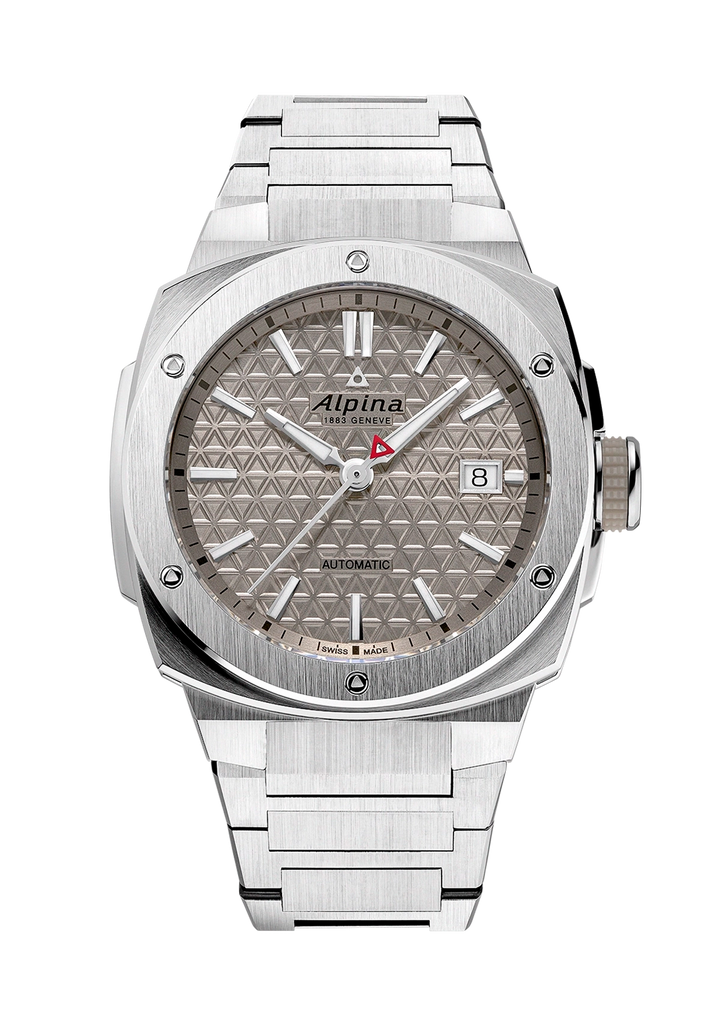
- Reference: AL-525BG3AE6B
- Movement: AL-525 (Sellita SW200 base); 38 hours
- Case: 39 × 40.5 mm; 11.5 mm thick
- Water Resistance: 200 m
- Bracelet: Stainless steel
- Swiss List Price: CHF 1,995
The useful alternatives are easy to group. Extreme Quartz and the light-powered Solarmetre favor convenience; the 37.5mm Solarmetre AL-140W3AE6 is my practical alternative, with up to ten months of running time after a full charge. Titanium, Skeleton, Regulator, and Chronograph versions cater to a particular material, display, or timing preference. I would choose those because I wanted that specific feature. A regulator separates the time displays across the dial; a skeleton exposes the movement and gives up some visual simplicity.
The Label Noir collaboration brings a manufacture movement and an entirely different look to the collection. I cover it separately below because Alpina gives it its own place in the current collection menu.
Where My Alpiner 4 Review Fits
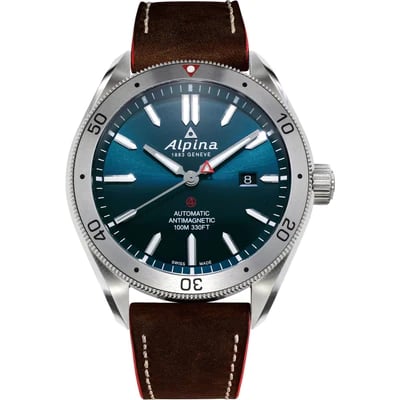
- Reviewed Reference: AL-525NS5AQ6
- Movement: Sellita-based AL-525 automatic; 38 hours
- Case Width: 44 mm
- Water Resistance: 100 m
- Older reviewed model; distinct from the current 40 mm Alpiner 4
My Alpiner 4 Automatic Blue review covers AL-525NS5AQ6, the older 44mm watch. The currently listed AL-525NS4AQ6B is a different, 40mm bracelet reference. I would read the older review for its design discussion while keeping that size difference firmly in mind. They are not interchangeable purchases.
Seastrong: For A Diver With A Distinctive Case
Seastrong is where I would turn for an Alpina diver. The current collection concentrates on Diver Extreme Automatic and GMT models, with color changes and collaborations such as The Real Time Show and Route du Rhum adding their own treatments of the design.
My pick: Seastrong Diver Extreme Automatic. This is the khaki model covered in my dedicated review. The compact steel case, matte ceramic dive bezel, and fitted rubber strap make it an appealing alternative to a conventional round diver. As with the Alpiner Extreme, I would factor in the short reserve.
- Reference: AL-525K3VE6
- Movement: AL-525 (Sellita SW200 base); 38 hours
- Case: 39 × 40.5 mm; 12.65 mm thick
- Water Resistance: 300 m
- Bezel / Strap: Matte ceramic; black rubber
- Swiss List Price: CHF 1,995
The Diver Extreme GMT AL-560B3VE6 is the alternative if a second time zone matters. Its AL-560 is based on the SW330, with a listed 50-hour reserve. The 24-hour bezel changes its purpose, so I would not treat it as the same elapsed-time diving tool with an extra hand.
If the Extreme case feels too modern, look at the twin-crown Diver 300 Heritage discussed below. Alpina currently places those watches in its Heritage collection, despite their Seastrong connection.
Startimer: The Pilot-Watch Collection
Startimer is the collection for aviation-style numerals, prominent crowns, and more traditional round cases. It includes automatic pilots, quartz Big Date chronographs, the new Solarmetre, and the more elaborate Watch Angels IFR automatic chronograph. I would begin with a three-hand model unless I specifically wanted the additional timing functions.
My pick: Startimer Pilot Automatic. The blue dial and brown leather strap are an easy combination to like. The round 40mm case offers a straightforward alternative to the cushion-shaped Extremes, while the 68-hour reserve makes it more convenient when I rotate watches.
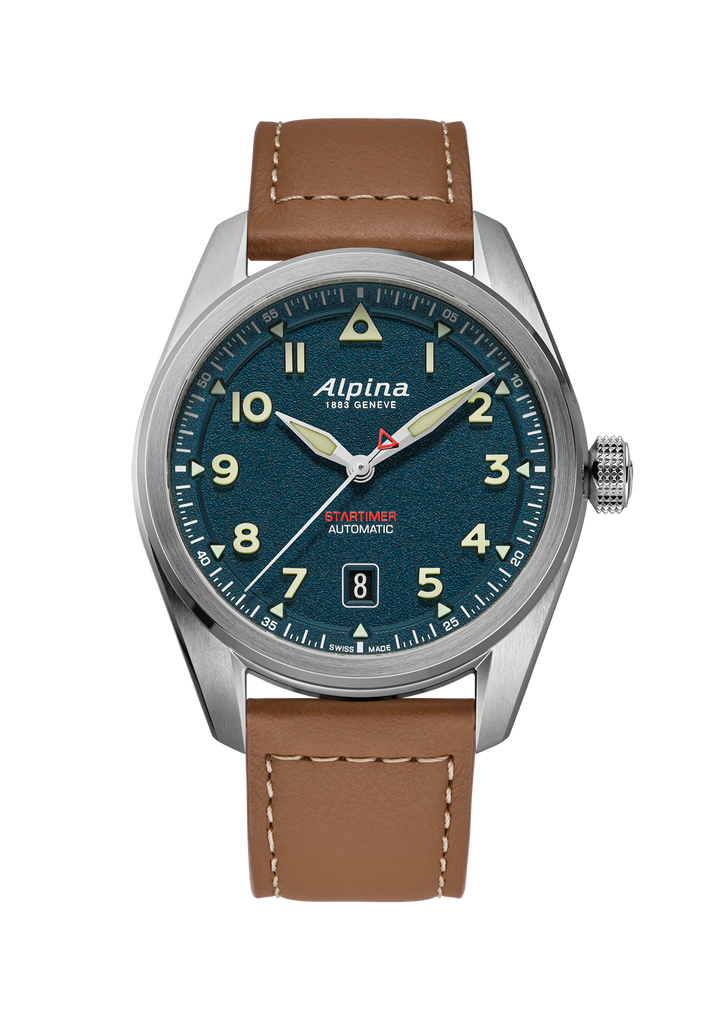
- Reference: AL-525NW4S36
- Movement: AL-525 (La Joux-Perret base); 68 hours
- Case: 40 mm; 11.5 mm thick
- Water Resistance: 100 m
- Strap: Brown leather
- Swiss List Price: CHF 1,295
There is an important detail here: this AL-525 is La Joux-Perret-based. The AL-525 in the Seastrong above is Sellita-based and rated for 38 hours. I would check the reference and movement specification before buying an older discounted Startimer on the assumption that it has the newer movement.
For greater convenience, the 38mm Pilot Solarmetre AL-140BW3S26 offers solar quartz and up to ten months of autonomy after a full charge. At the October 11 check, Alpina listed it for pre-order with departure during November 2026. It is an option to consider if the wait suits you.
The Watch Angels IFR chronograph sits at the specialized end of the family. Its 43mm case and 15.9mm thickness make it a very different proposition from the simple Pilot Automatic. I would explore it for the aviation complication, rather than treat it as the default upgrade.
Heritage: The Quieter Side Of Alpina
Heritage is my favorite reminder that Alpina does more than chunky sports watches. The collection spans the rectangular Carrée, a round 38mm Heritage Automatic, the 34mm Tropic-Proof Handwinding, and the vintage-styled Diver 300 Heritage. That is enough variety to warrant looking beyond the first watch in the collection.
My pick: Heritage Alpiner Carrée Automatic. I like the dark blue dial, small seconds, and brown ostrich-leather strap as an alternative to another round watch. It is a good illustration of how far this collection reaches beyond Alpina’s more familiar sports-watch designs.
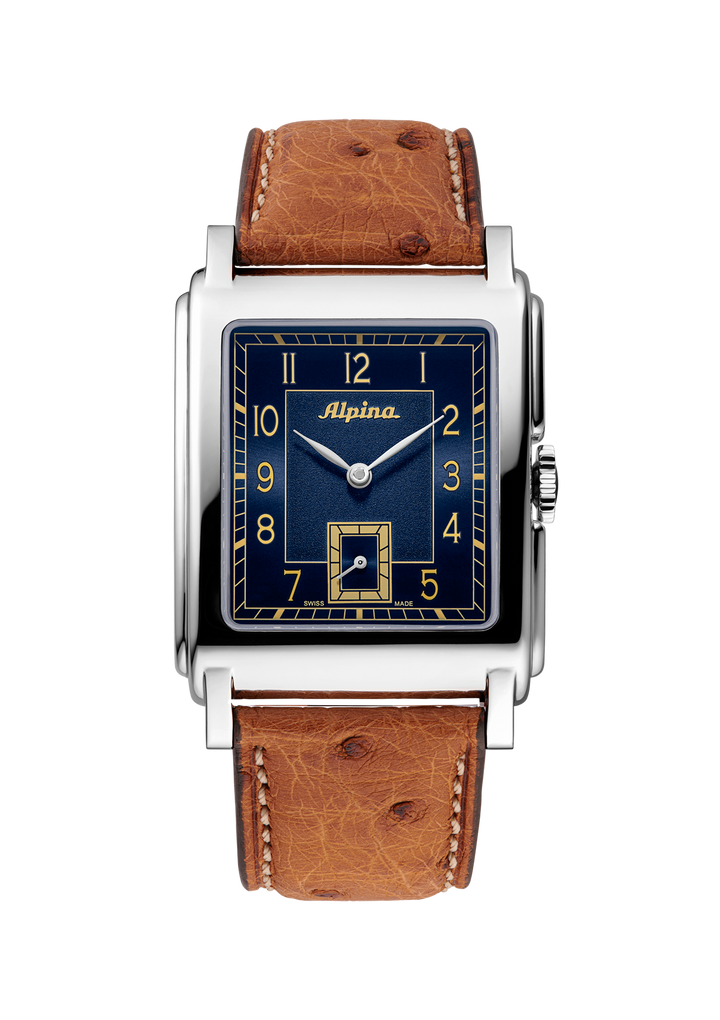
- Reference: AL-530N3C6
- Movement: AL-530 automatic; 38 hours
- Case: 32.5 × 39 mm; 10.55 mm thick
- Water Resistance: 30 m
- Strap: Light brown ostrich leather
- Swiss List Price: CHF 1,695
This is the one I would choose for a dressier role. Its 30m water-resistance rating and leather strap make it a less natural swimming companion than the Seastrong. The dimensions also describe a rectangular case, so I would not compare its 32.5mm width directly with a round 32.5mm watch.
For a round alternative, I would compare the 38mm Heritage Automatic with the smaller Tropic-Proof. The former winds automatically; the latter offers the daily involvement of a hand-wound movement and a 42-hour reserve. Both are listed at 30m water resistance, regardless of their historical inspiration.
The Diver 300 Heritage AL-520GR4H6 takes a different direction: 42mm, an internal rotating bezel, 300m water resistance, and a 38-hour automatic movement. It is my alternative for someone who likes older dive-watch styling. Twin crowns alone do not establish that a watch has a pressure-operated super-compressor mechanism.
Alpina × Label Noir
The Label Noir collaboration gives the Alpiner Date Manufacture a white dial, white textile strap, and hammered case details. I find the restrained palette more interesting than the edition size: the texture has to do much of the visual work.
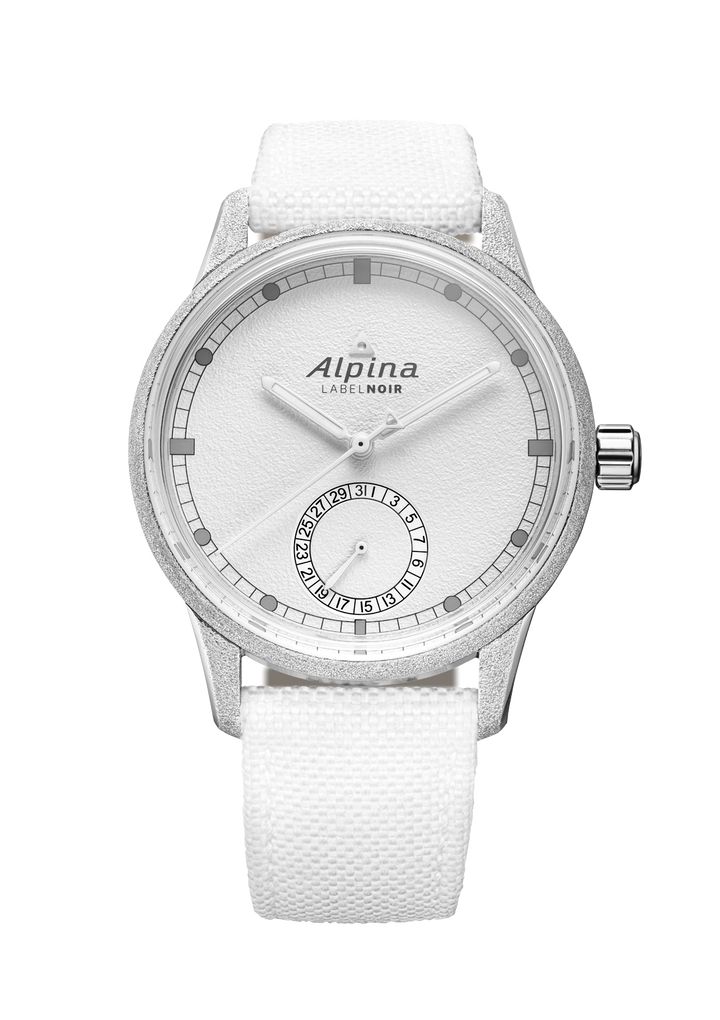
- Reference: AL-706W4E6
- Movement: AL-706 manufacture automatic; 72 hours
- Case: 41.5 mm; 13 mm thick
- Water Resistance: 50 m
- Edition: 130 pieces; white textile strap
- Swiss List Price: CHF 3,495
The AL-706 manufacture movement and 72-hour reserve distinguish it from the supplied-caliber Extremes. At CHF 3,495, I would want the white-on-white design to be a large part of the attraction. Its 41.5mm case, 13mm thickness, and 50m rating also make it a different everyday proposition from the smaller, more water-resistant Extreme Automatic. The edition is limited to 130 pieces; that is a production figure, not a statement of remaining stock.
Alpina × The Real Time Show
The Real Time Show collaboration is the Seastrong I would consider if I preferred a no-date dial. A charcoal background, white luminous details, and orange seconds hand change the character noticeably from the khaki watch in my dedicated review.
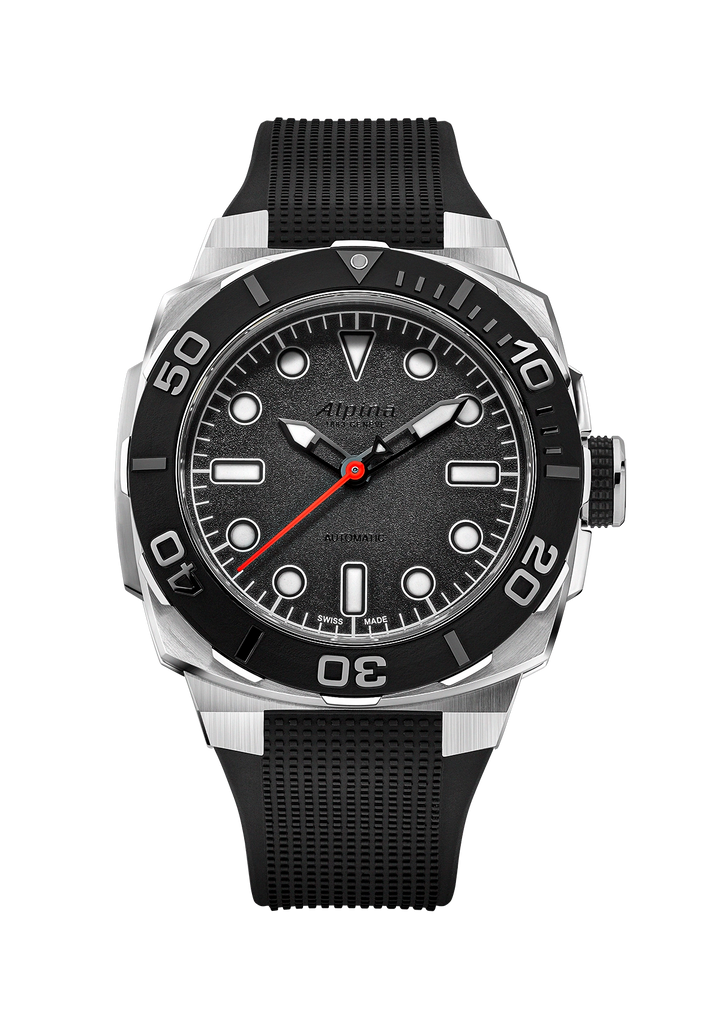
- Reference: AL-520G3VE6
- Movement: AL-520 automatic; 38 hours
- Case: 39 × 40.5 mm; 12.65 mm thick
- Water Resistance: 300 m
- Dial / Strap: No date; black rubber strap
- Swiss List Price: CHF 1,995
Its AL-520 provides the same listed 38-hour reserve as the regular Seastrong’s AL-525, while the date display is omitted. I would choose between them primarily for the dial and date preference. My Seastrong review covers the khaki AL-525K3VE6, so I am not presenting its observations as a hands-on assessment of this collaboration.
Quality And Ownership: What I Would Check
I would compare the actual purchase price, warranty, and fit before deciding that one is better value. The Startimer’s longer reserve is a practical advantage. The Alpiner and Seastrong ask me to value their case designs, bracelets or straps, and different water-resistance ratings. The Carrée earns its place through its shape and dressier personality.
Fit deserves more attention than the diameter alone. Case height and the way a bracelet or fitted strap leaves the case affect comfort. The published two-part Extreme case dimensions are useful, but I would not turn them into an independent lug-to-lug measurement. I would also check replacement-strap options before assuming a shaped attachment accepts an ordinary straight-ended strap.
For ownership, Alpina publishes a two-year international warranty, subject to its terms, authorized purchase documentation, and approved servicing. A retailer’s own warranty can be a different arrangement. I have not assessed Alpina’s repair service personally, so I would keep the coverage and service process separate from my opinion of the watches.
Which Alpina Would I Choose?
For an everyday bracelet watch, I would start with the Alpiner Extreme Automatic. If I preferred a round case and a longer reserve, I would choose the new Startimer Pilot Automatic. For a diver, the khaki Seastrong Extreme is my first stop; for a dressier second watch, it is the Heritage Carrée.
I would compare the Seastrong with the watches in my DOXA guide, and the Startimer with my Laco guide. Those comparisons help clarify whether I want Alpina’s particular design language. The most convincing reason to buy one is that the watch itself appeals to you after the specifications and practical compromises are understood.
Alpina Watches FAQ
Is Alpina Swiss or Japanese?
Alpina is a Swiss watch brand with a manufacture in Geneva. It became part of Japan's Citizen Group through the 2016 acquisition of Frédérique Constant Holding. Ownership and manufacturing location are different things.
Does Alpina make its own movements?
Some models use manufacture calibers, such as the AL-706 in the Alpiner Date Manufacture. Others use supplied movements, including Sellita and La Joux-Perret bases. I would check the exact model rather than apply an in-house claim to the whole brand.
Do all AL-525 movements have the same power reserve?
No. The reviewed Seastrong AL-525K3VE6 lists a Sellita-based AL-525 with 38 hours, while the newer Startimer AL-525NW4S36 lists a La Joux-Perret-based AL-525 with 68 hours. The watch reference and generation matter.
Which Alpina would I consider for a smaller wrist?
I would compare the 34mm Tropic-Proof, the 37.5mm-wide Alpiner Extreme Solarmetre, and the rectangular 32.5 × 39mm Heritage Carrée. Case shape, height, and strap fit still matter; those widths are not directly comparable.
Does my Alpiner 4 review cover the current 40mm model?
No. My review covers the older 44mm AL-525NS5AQ6. The currently listed 40mm AL-525NS4AQ6B is a different reference. I would use the older article for its specific watch, without transferring its size or fit observations to the newer model.