Circula Watches Review: Are Circula Watches Good?
Circula is exactly the kind of independent watch brand I like spending time with because it does not need a long explanation to make sense. The brand builds mechanical tool watches in Pforzheim, Germany, it has been around since 1955, and its modern catalog feels like it was designed by people who actually listen to watch enthusiasts.
That does not automatically make every Circula watch the right buy. This is still a smaller independent brand, so you should think differently than you would when buying a Hamilton, Tissot, Seiko, Sinn, or Longines. But if you care about tool-watch specs, compact dimensions, interesting dial work, and a brand story that feels genuinely personal, Circula deserves a much closer look.
My short answer: Circula watches are good, especially if you want a German-made tool watch with strong specifications, enthusiast-driven design, and more personality than the usual mainstream options. The brand is at its best in dive, field, pilot, and everyday sports watches, and the watches I have spent the most time with have consistently felt thoughtful rather than generic.
By clicking on the product links in this article, we may receive a commission fee at no cost to you. Thank you for your support.
Circula Watches At A Glance
| Category | TWR Take |
|---|---|
| Founded | 1955 |
| Based in | Pforzheim / Keltern, Germany |
| Current owner | Cornelius Huber, third generation of the Huber family |
| Best known for | German-made tool watches, dive watches, field watches, pilot watches, and steel sports watches |
| Common movements | Sellita SW200, Sellita SW330, and La Joux-Perret G100 automatic movements |
| Typical price range | Roughly around $900 to $2,000 for many core models |
| Best collections | AquaSport, ProSea, ProTrail, ProFlight, DiveSport, SuperSport, and Facet |
| Strengths | Strong specs, Pforzheim assembly and regulation, compact cases, distinctive dials, real tool-watch substance |
| Weaknesses | Limited retail access, smaller-brand resale, some models are limited or can sell out |
| Best buyer | Someone who wants a capable independent German watch with personality and real-world usability |
Quick Verdict: Are Circula Watches Good?
Yes, Circula watches are good. More specifically, they are good for the enthusiast who wants a modern German tool watch and does not need the brand name on the dial to do all the talking.
What stands out to me is how complete the watches often feel. Circula tends to combine sensible case sizes, Swiss automatic movements, useful water resistance, sapphire crystals, thoughtful lume, and small fit details like quick-change straps or micro-adjust clasps. None of those details are unusual on their own. The appeal is that Circula often puts them together without making the watch feel overdesigned or inflated.
The brand also has a recognizable point of view. The Petrol dials, hardened cases, compact 40mm tool-watch proportions, and enthusiast-influenced designs make Circula feel more specific than many microbrands that simply chase whatever style is currently hot.
Circula Brand History
Circula was founded in 1955 by Heinz Huber in Pforzheim, one of Germany’s historic centers of watchmaking and jewelry production. The brand is now run by Cornelius Huber, Heinz Huber’s grandson, which gives Circula a real family-business continuity that many modern enthusiast brands do not have.
The current version of Circula is not trying to pretend it is a sleepy old brand frozen in the 1960s. That is one of the things I like about it. The heritage is there, but the modern watches are not museum pieces. They are contemporary tool watches that borrow from the past when it helps the design, then move forward with modern materials, water resistance, movement regulation, and wearability.
Circula says its watches are assembled and tested in its Pforzheim workshop, with each movement regulated and each case checked for water resistance before leaving the facility. That matters because “German watch” can be a vague marketing phrase if a brand is not clear about what is actually happening in Germany. With Circula, the Pforzheim connection is central to the identity.
What Makes Circula Watches Different?
The biggest differentiator is the combination of restraint and character. A lot of modern independent watches go in one of two directions: either they are extremely safe, or they are so loud that the novelty becomes the entire point. Circula usually lands in a better middle ground.
The Circula SuperSport Petrol is a good example. It has genuine super compressor engineering, two crowns, a 300m water-resistance rating, and a dramatic petrol dial. On paper, that could easily become too much. In practice, the 40mm case and 46.5mm lug-to-lug distance keep it wearable and disciplined.
The Circula DiveSport Titanium Petrol takes the same idea in a more modern direction. It is a 500m titanium diver with a hardened case, a hand-scratched dial texture, and a tool-watch personality that feels genuinely different from the usual vintage-inspired dive watch formula.
Then there is the Circula Facet Petrol, which is probably the cleanest example of Circula moving beyond the dive-watch lane. It is an integrated-bracelet sports watch with a 38mm case, a 44.5mm lug-to-lug, a 9.9mm thickness, and a 68-hour La Joux-Perret movement. It still feels like Circula, but in a more architectural and everyday-wearable way.
Circula Watch Quality, Movements, And Specs
Circula watches generally use Swiss automatic movements rather than in-house calibers. That is exactly what I would want at this price point. In-house movements can sound exciting, but for a smaller tool-watch brand, a well-regulated Sellita or La Joux-Perret movement is usually the more practical ownership choice.
The AquaSport II and earlier SuperSport models use Sellita SW200-family movements. The AquaSport GMT uses the Sellita SW330-2 in Top grade, which brings a caller-style GMT function and a typical power reserve around 56 hours. The newer ProTrail Power+, ProFlight Power+, and ProSea Power+ models use the Sellita SW200-2 Power+ with a longer 65-hour power reserve. The Facet uses the La Joux-Perret G100, which is a serious step up for an integrated-bracelet sports watch because it brings a 68-hour power reserve in a relatively slim package.
The case specs are just as important as the movements. Circula seems to understand that a tool watch does not need to be huge to feel capable. The ProTrail, ProFlight, ProSea, AquaSport II, and AquaSport GMT all sit around 40mm with short 46mm lug-to-lug measurements. That makes the brand unusually friendly to average wrists while still giving you meaningful water resistance and durability.
I also like that Circula is not shy about hardening cases where it makes sense. The ProTrail, ProFlight, and ProSea Power+ models use hardened stainless steel rated up to 1,200 Vickers, while the DiveSport Titanium uses hardened Grade 2 titanium. That kind of spec is easy to overlook in photos, but it matters once a watch becomes part of real life.
Best Circula Watches To Consider
The best Circula watch depends on whether you want a diver, a field watch, a pilot watch, or a more refined daily sports watch. I would start with the watches below.
Circula Facet Petrol
- Movement: Automatic
- Caliber: La Joux-Perret G100 Soigne (Elabore grade)
- Power Reserve: 68 hours
- Case Width: 38 mm
- Lug-to-Lug Distance: 44.5 mm
- Case Thickness: 9.9 mm
- Water Resistance: 100 m
- Price: Around $1,990
The Facet Petrol is the Circula I would recommend first to someone who wants the brand’s personality in a watch that can work almost anywhere. It is still interesting, but it is not a pure tool watch in the same way the DiveSport or ProTrail is.
The proportions are excellent: 38mm wide, 44.5mm lug-to-lug, and under 10mm thick. That makes it easy to wear, while the integrated bracelet and angular finishing give it enough presence to avoid feeling plain.
The La Joux-Perret G100 movement is a major part of the value story here. A 68-hour power reserve, decorated rotor, and fine adjustment in Pforzheim make the Facet feel like more than just another integrated-bracelet watch chasing the trend.
Read my full Circula Facet Petrol review for a closer look at the dial texture, bracelet, case geometry, and movement.
Circula SuperSport Petrol
- Movement: Automatic
- Caliber: Sellita SW200-1
- Power Reserve: 41 hours
- Case Width: 40 mm
- Lug-to-Lug Distance: 46.5 mm
- Case Height: 12 mm / 13.3 mm with crystal
- Water Resistance: 300 m
- Price: Around $900
The SuperSport Petrol is one of my favorite Circula watches because it has a bit of romance to it. A lot of watches borrow the dual-crown compressor look, but Circula went further and built a genuine super compressor case with 300 meters of water resistance.
What keeps it from feeling like a novelty is the sizing. At 40mm wide and 46.5mm lug-to-lug, it wears like a confident daily diver rather than a chunky retro object. The petrol dial also helps: deep, moody, and colorful without becoming cartoonish.
Availability is the only real caveat, since Circula has listed final models of some SuperSport variants. If you find one in the configuration you want, it is one of the most distinctive Circula divers.
Read the full Circula SuperSport Petrol review for more on the compressor case, internal bezel, dial, and wrist feel.
Circula DiveSport Titanium Petrol
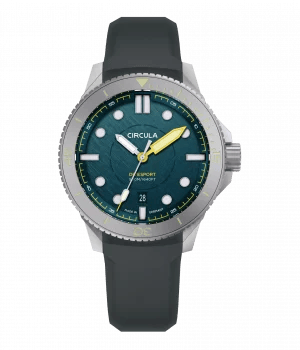
- Movement: Automatic
- Caliber: Sellita SW200-1 (Elabore grade)
- Power Reserve: 41 hours
- Case Width: 42 mm
- Lug-to-Lug Distance: 48.5 mm
- Water Resistance: 500 m
- Price: Around $1,300
The DiveSport Titanium Petrol is the Circula for someone who wants the brand at its most rugged. It is a 500m titanium diver with hardened surfaces, a serious bezel, strong lume, and a dial texture that feels almost organic.
This is not the most versatile Circula watch, and that is fine. It is the one I would choose for hiking, travel, water, and general rough-use scenarios where I want something lighter than steel but tougher than the average desk-diver.
The 42mm width sounds larger than some of the other Circula models, but the 48.5mm lug-to-lug and titanium construction keep it more wearable than the spec sheet might suggest.
Read my full Circula DiveSport Titanium Petrol review for the deeper dive on the hardened titanium case, hand-scratched dial, bracelet, and movement.
Circula AquaSport II
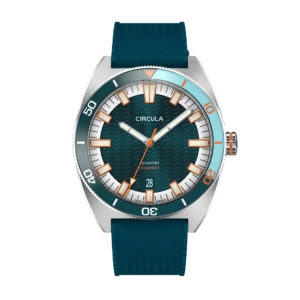
- Movement: Automatic
- Caliber: Sellita SW200-1 Elabore
- Power Reserve: 41 hours
- Case Width: 40 mm
- Lug-to-Lug Distance: 46 mm
- Water Resistance: 200 m
- Price: Around $990
The AquaSport II is probably the easiest Circula dive watch to recommend broadly. It has the brand’s compact 40mm by 46mm footprint, 200 meters of water resistance, a Sellita SW200-1 Elaboré movement, a sapphire bezel, and enough color options to feel lively without being unserious.
This is where I would start if someone wanted a Circula diver but did not need the extreme 500m rating of the DiveSport or the vintage compressor character of the SuperSport. The AquaSport II is simply a very sensible modern diver.
I especially like the AquaSport II because it feels like a grown-up alternative to the usual affordable diver short list. It is not trying to be a Submariner homage, and it is not a huge slab of steel. It is compact, legible, German-made, and still a little playful.
Circula AquaSport GMT

- Movement: Automatic GMT
- Caliber: Sellita SW330-2 Top Grade
- Power Reserve: 56 hours
- Case Width: 40 mm
- Lug-to-Lug Distance: 46 mm
- Water Resistance: 200 m
- Price: Around $1,590
The AquaSport GMT takes the AquaSport formula and makes it more travel-friendly. The Sellita SW330-2 Top grade movement, 48-click bidirectional GMT bezel, 200 meters of water resistance, 40mm case, and 46mm lug-to-lug make it one of the more practical Circula options if you want one watch for travel and daily wear.
It is not a flyer GMT, so frequent travelers who want jumping local-hour functionality may still prefer another option. But for tracking a second time zone, the AquaSport GMT gives Circula a useful lane that sits between dive watch and travel watch.
Circula ProTrail Power+
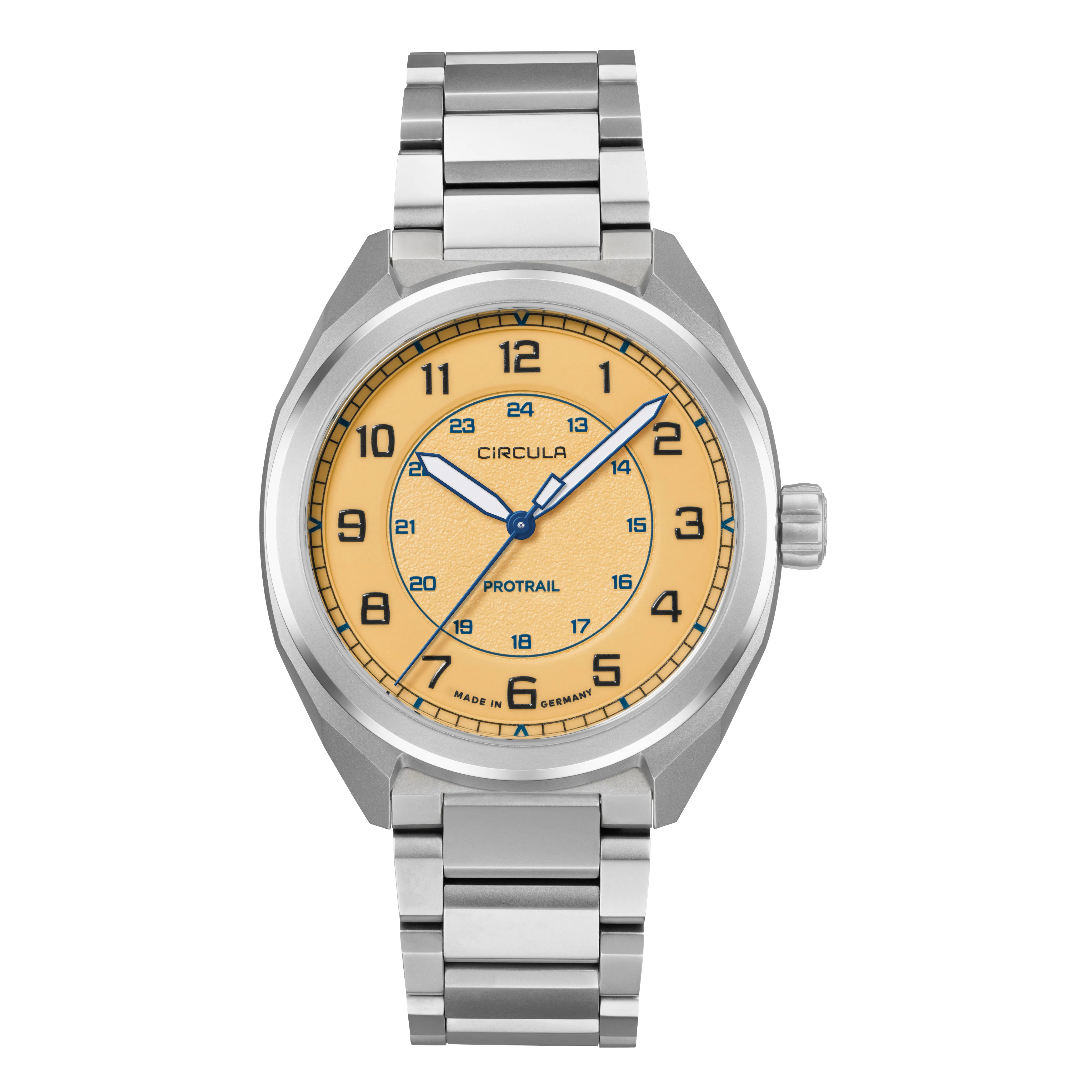
- Movement: Automatic
- Caliber: Sellita SW200-2 Power+ Elabore
- Power Reserve: 65 hours
- Case Width: 40 mm
- Lug-to-Lug Distance: 46 mm
- Case Height: 11 mm / 12.3 mm with crystal
- Water Resistance: 150 m
- Price: Around $1,290
The ProTrail Power+ is the field-watch side of Circula, and it might be the most convincing watch in the lineup for someone who likes Sinn-style practicality but wants something less common.
The formula is excellent: 40mm case, 46mm lug-to-lug, 15 ATM water resistance, a screw-down crown, hardened steel up to 1,200 Vickers, antimagnetic protection up to 80,000 A/m, and a Sellita SW200-2 Power+ movement with a 65-hour reserve. That is a lot of real-world capability in a watch that still looks clean and wearable.
The ProTrail Sand is the version I personally find most interesting because the warm dial gives the watch a more outdoors-oriented personality. A black field watch is always useful, but the sand dial makes the ProTrail feel more Circula.
Circula ProSea Power+
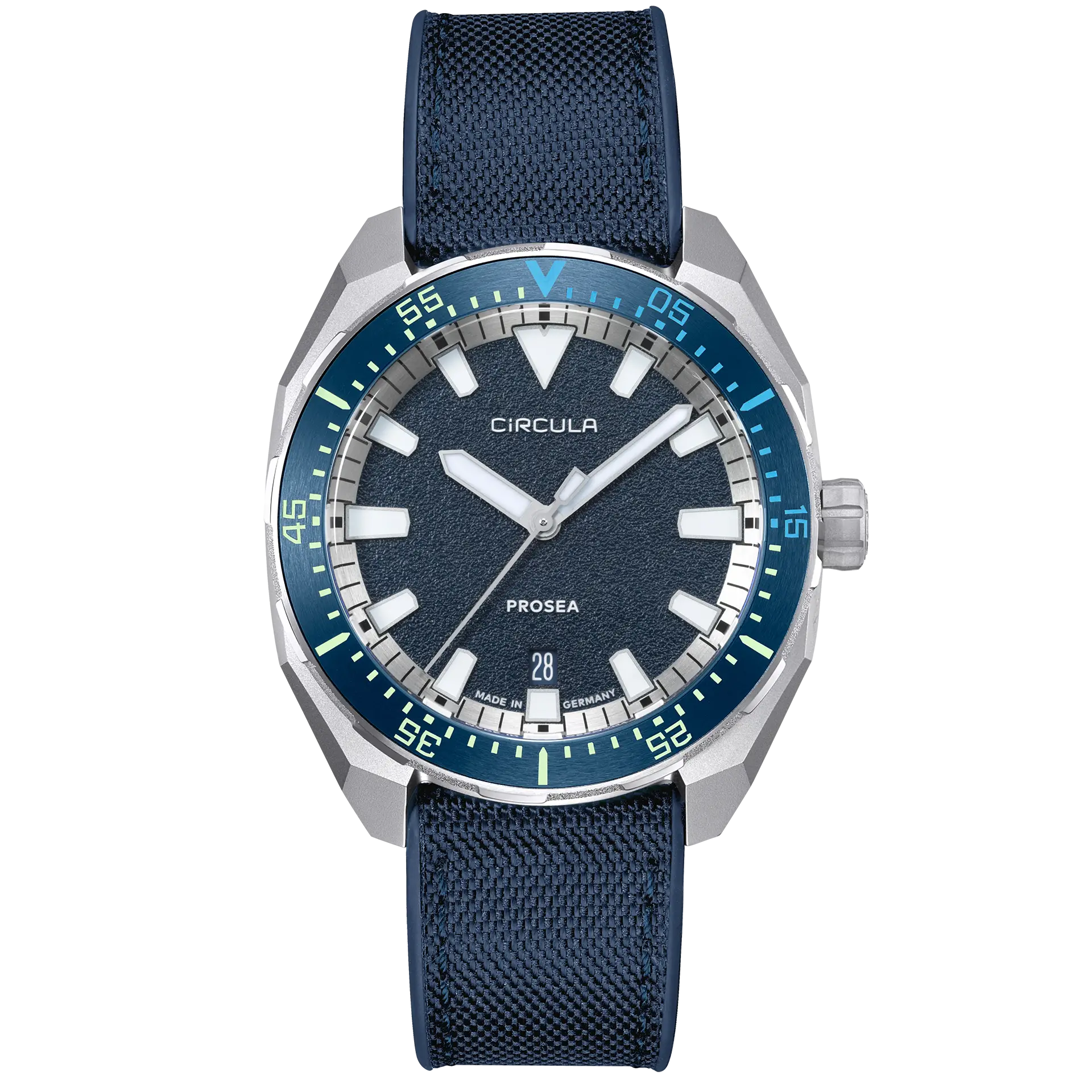
- Movement: Automatic
- Caliber: Sellita SW200-2 Power+ Elabore
- Power Reserve: 65 hours
- Case Width: 40 mm
- Lug-to-Lug Distance: 46 mm
- Case Height: 11.7 mm / 12.9 mm with crystal
- Water Resistance: 200 m
- Price: Around $1,190
The ProSea Power+ is Circula’s modern steel dive watch for someone who wants current specs rather than vintage atmosphere. It has a 40mm case, 46mm lug-to-lug, 20 ATM water resistance, ceramic bezel insert, hardened steel case and bracelet, quick-adjust clasp, and the 65-hour Sellita SW200-2 Power+ movement.
This is the Circula I would compare against modern, serious divers from brands like Sinn, Mido, Certina, and Christopher Ward. It is more technical than romantic, which is exactly what some buyers want.
If the SuperSport is the charming vintage-inspired choice and the DiveSport Titanium is the overbuilt adventurer, the ProSea Power+ is the straightforward modern diver.
Circula ProFlight Power+
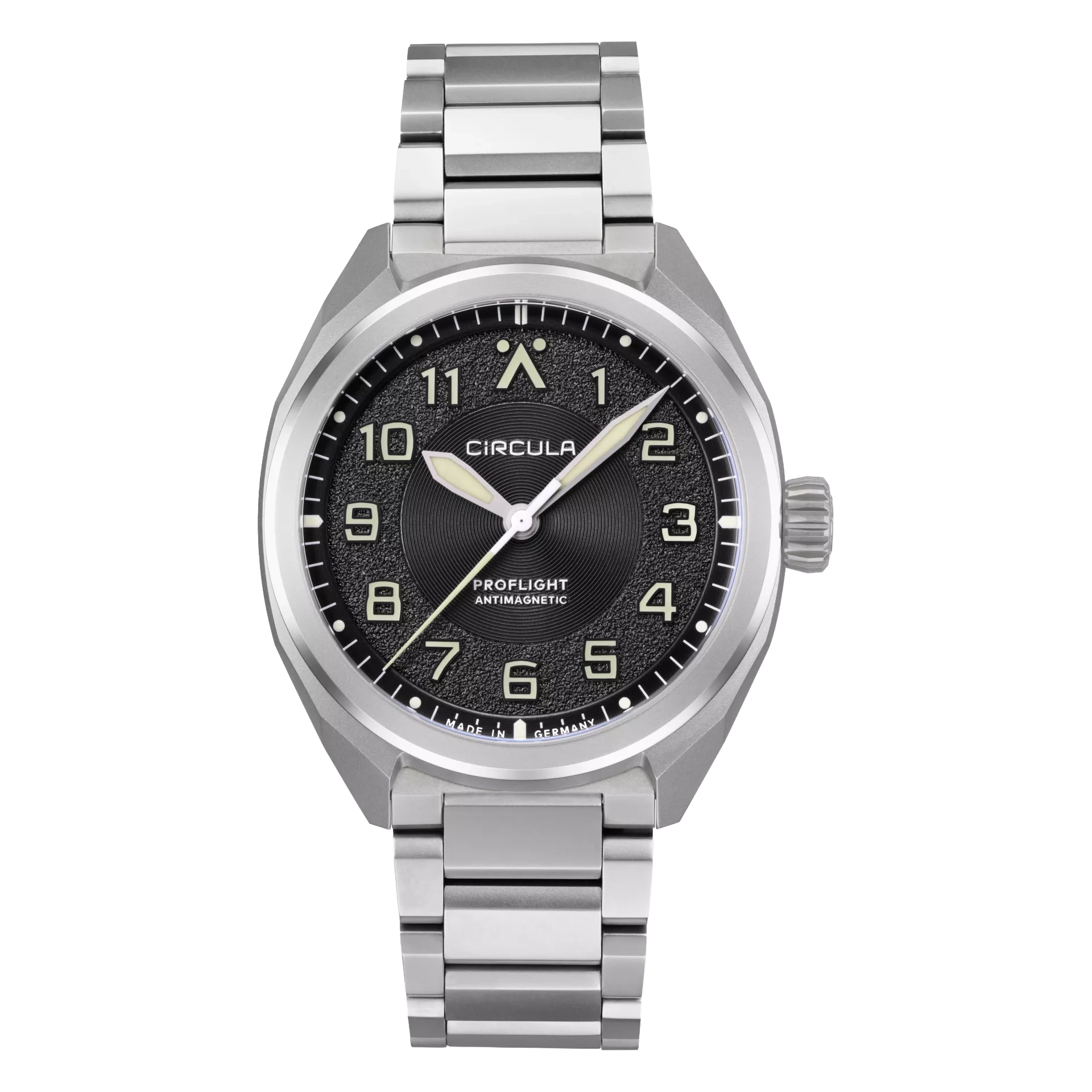
- Movement: Automatic
- Caliber: Sellita SW200-2 Power+ Elabore
- Power Reserve: 65 hours
- Case Width: 40 mm
- Lug-to-Lug Distance: 46 mm
- Case Height: 11 mm / 12.3 mm with crystal
- Water Resistance: 150 m
- Price: Around $1,290
The ProFlight Power+ brings the same hardened-steel, antimagnetic, 65-hour Power+ movement formula into a pilot-watch design. It uses a 40mm case, 46mm lug-to-lug, 15 ATM water resistance, and a dial built around large numerals and strong legibility.
What I like here is that Circula avoids making the ProFlight look like a generic Type A flieger copy. You still get the orientation-first pilot-watch concept, but the case finishing, dial structure, and more tactical profile make it feel modern.
If you like pilot watches but already find many traditional fliegers a little too predictable, the ProFlight Power+ is one of the more interesting Circula models.
Circula Vs Other Watch Brands
Circula Vs Hamilton
Hamilton has broader name recognition, deeper mainstream distribution, and stronger American-Swiss heritage. If you want the safer buy, Hamilton is usually easier to recommend.
Circula fights back with more enthusiast-focused tool-watch details in certain models: hardened cases, compact lug-to-lug measurements, higher water resistance, and more unusual dial execution. I would choose Hamilton for classic field and aviation heritage. I would choose Circula when the specific watch’s specs and design feel more exciting.
Circula Vs Sinn
Sinn is the more established German tool-watch name, especially for buyers who care about professional-instrument credibility. Sinn also has decades of collector trust behind models like the 556, 104, U1, and EZM series.
Circula is not Sinn, but it is interesting for a different reason. It gives you some of that German tool-watch seriousness in a smaller, more design-forward, more approachable package. The ProTrail and ProSea Power+ are the Circula models I would compare most directly with Sinn’s practical side.
Circula Vs Laco
Laco is the stronger heritage pick for traditional German pilot watches. If you want a classic flieger, Laco is hard to beat.
Circula feels more modern and broader. The ProFlight Power+ gives you pilot-watch readability, but the brand also has dive watches, a GMT, hardened field watches, and the Facet sports watch. I would choose Laco for historical purity and Circula for modern tool-watch variety.
Circula Vs Christopher Ward
Christopher Ward has become one of the strongest value players in the enthusiast watch world, especially with its dive watches, GMTs, and integrated-bracelet sports watches. It also has a broader catalog and stronger brand awareness.
Circula feels smaller and more personal. That can be a drawback if resale value or retail support matters most, but it is also part of the charm. If you want maximum mainstream microbrand value, Christopher Ward is tough to beat. If you want a more independent German identity, Circula is more distinctive.
Circula Pros
-
Excellent sizing: Circula seems to understand that a tool watch can be serious without being oversized. The frequent 40mm diameter and 46mm lug-to-lug formula is a sweet spot for a lot of wrists.
-
Strong dial work: The Petrol color across the SuperSport, DiveSport, and Facet could have felt repetitive, but each version has its own personality. The SuperSport feels vintage and charming, the DiveSport feels rugged and textured, and the Facet feels architectural and refined.
-
Practical ownership details: Regulated movements, water-resistance testing, hardened cases, quick-change systems, and useful clasp designs are not glamorous talking points, but they make a watch better after the honeymoon phase.
-
A human-sized brand feel: Circula does not feel like a marketing department wearing a vintage jacket. It feels like a family-owned company trying to make watches that enthusiasts will actually wear.
Circula Cons
-
Availability can be uneven: Some Circula models or variants are limited, phased out, or available in batches. That can make the hunt more fun, but it also makes shopping less straightforward.
-
Limited retail access: Most buyers will not be able to walk into a local authorized dealer and compare five Circula models in person. With a smaller brand, you need to be more comfortable buying online and relying on measurements, photos, reviews, and return policies.
-
Resale and recognition are smaller-brand tradeoffs: Circula has real history, but it does not carry the same market familiarity as Hamilton, Seiko, Tissot, Longines, or Sinn. If your first priority is resale strength, this is probably not the brand to optimize around.
Who Should Buy A Circula Watch?
Buy a Circula if you want a capable, independent German watch that feels a little more personal than the obvious mainstream choice.
The brand makes the most sense for someone who already knows what they like: a compact diver, a hardened field watch, a modern pilot watch, a real compressor-style diver, or a refined integrated-bracelet sports watch. Circula is not really about buying a logo. It is about buying a specific watch because the design and specs click.
I would especially recommend Circula to collectors who enjoy brands like Sinn, Laco, Damasko, Christopher Ward, Formex, Traska, Nodus, and Monta, but want something from a smaller German family-owned brand.
Who Should Skip Circula?
Skip Circula if you want maximum brand recognition, easy in-store try-ons, strong resale liquidity, or a watch from a large established Swiss or Japanese manufacturer.
I would also be cautious if you are new to watches and want the safest possible first mechanical watch. A Hamilton Khaki Field, Seiko diver, Tissot PRX, Certina DS Action, or Mido Ocean Star may be easier to research, resell, service, and compare in person.
That does not make Circula worse. It just means the brand is more rewarding when you are comfortable buying from independent watchmakers and choosing based on design, specs, and ownership feel rather than logo familiarity.
Are Circula Watches Worth The Money?
Yes, Circula watches can be worth the money if you value the full package: German assembly and testing, Swiss automatic movements, compact case design, strong water resistance, and distinctive tool-watch character.
The value is especially strong in watches like the AquaSport II, ProTrail Power+, ProSea Power+, and SuperSport Petrol. These are watches where the spec sheet and design identity both make sense for the price. The Facet costs more, but it also brings the La Joux-Perret G100 movement, slim case, and more complex integrated-bracelet execution.
The main reason not to buy one is if you are hoping for mainstream-brand security. A Circula is a more personal purchase. You buy it because the details matter to you, not because everyone at the table will recognize the name.
Final Verdict
Circula is one of the more compelling independent German watch brands in the enthusiast space right now. The brand has real history, a family-owned structure, Pforzheim assembly and regulation, and a modern catalog that feels genuinely useful rather than decorative.
What I appreciate most is that Circula does not seem interested in making anonymous watches. Even the practical models have a specific voice: the AquaSport is compact and colorful, the ProTrail is rugged but not dull, the ProFlight is modern rather than purely nostalgic, the ProSea is technically serious, the SuperSport is charmingly unusual, the DiveSport is overbuilt in the right way, and the Facet shows the brand can do everyday refinement too.
If you want the safest possible watch purchase, choose a larger brand. If you want something more personal, more independent, and still very capable, Circula is absolutely worth considering.
Circula Watches FAQ
Are Circula watches good?
Yes. Circula watches are good if you want a German-made independent tool watch with strong specifications, Swiss automatic movements, compact dimensions, and distinctive design.
Where are Circula watches made?
Circula watches are assembled and tested in Pforzheim, Germany. The brand says each movement is regulated and each watch is checked for water resistance before leaving its workshop.
Is Circula a German watch brand?
Yes. Circula is a German watch brand founded in 1955 by Heinz Huber and now run by Cornelius Huber, the third generation of the Huber family.
What movements do Circula watches use?
Circula uses Swiss automatic movements including Sellita SW200-family movements, the Sellita SW330-2 GMT movement, and the La Joux-Perret G100 depending on the model.
What is the best Circula watch?
The best Circula watch depends on use case. The AquaSport II is the easiest everyday diver, the ProTrail Power+ is the best rugged field watch, the ProSea Power+ is the modern technical diver, and the Facet is the best refined everyday sports watch.
Are Circula watches Swiss made?
No. Circula watches are German-made, while many of their movements are Swiss-made. Circula assembles, regulates, and tests the watches in Germany.
Are Circula watches worth the money?
Yes, Circula watches are worth considering if you value German assembly, regulated Swiss movements, strong specifications, and independent-brand character. They are less ideal if resale value or mainstream brand recognition is your top priority.
Is Circula better than Hamilton?
Circula is not broadly better than Hamilton, but it can be more interesting for certain buyers. Hamilton has stronger name recognition and heritage, while Circula often offers more enthusiast-focused tool-watch specs and a smaller independent German identity.